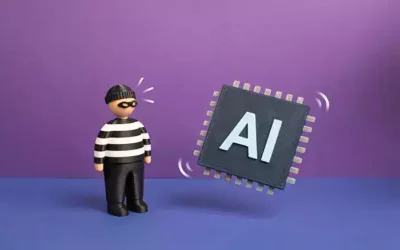
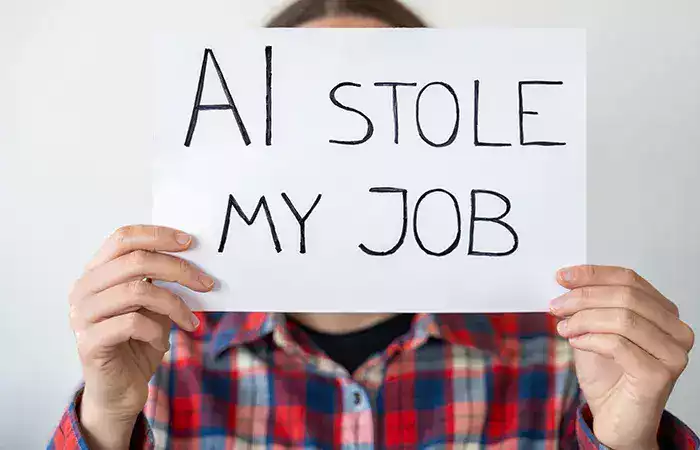
The question echoes through every industry, every meeting room, and every coffee break conversation. Will artificial intelligence take our jobs? The headlines scream both warnings and reassurances. One day, a major consultancy predicts that millions of jobs will be lost to automation. The next, a tech CEO announces that AI will create more jobs than it destroys. The conflicting messages leave workers anxious and confused.
The truth is more nuanced than either extreme. AI will certainly replace some jobs. It will also create new jobs that do not exist today. But for most people, the impact will not be job loss or job creation. It will be job transformation. The way you work will change. The tasks you perform will shift. The skills you need will evolve.
As an SEO and labor market analyst who has studied technological disruptions for over a decade, I have seen this pattern before. The internet did not eliminate the need for research. It transformed research from card catalogs to search engines. Email did not eliminate communication. It accelerated it. The industrial revolution did not eliminate work. It shifted it from farms to factories.
This guide cuts through the fear and the hype. You will learn which jobs are most at risk, which are most likely to grow, and how to position yourself for the AI-powered economy.
Part 1: What History Teaches Us About Technology and Jobs
Fear of technological unemployment is not new. When the industrial revolution introduced automated looms, textile workers called themselves Luddites and smashed the machines. They feared the looms would replace them. They were right—the looms did replace specific weaving jobs. But they were also wrong—employment in textiles did not disappear. It shifted. Weavers became loom operators. New roles emerged for machine maintenance, quality control, and factory management.
When personal computers entered offices in the 1980s, secretaries feared for their jobs. Typing pools were eliminated. But new roles emerged: desktop publishing specialists, spreadsheet analysts, IT support technicians. The number of office jobs grew, even as specific tasks disappeared.
When the internet became mainstream in the 1990s, travel agents feared extinction. Online booking sites did eliminate many travel agent jobs. But new roles emerged: search engine optimizers, social media managers, e-commerce specialists, user experience designers. Jobs that no one in 1990 could have named.
The pattern is consistent. Technology eliminates specific tasks, not entire occupations. It changes how work is done. It creates new categories of work that did not exist before. The net effect on total employment has historically been positive, even as individual workers and industries experienced painful transitions.
Part 2: What AI Actually Does to Jobs
To understand AI’s impact, you must understand what AI actually does. AI automates tasks, not jobs. A job is a collection of many tasks. Some tasks are routine, predictable, and rule-based. Some tasks require judgment, creativity, empathy, and physical dexterity.
AI excels at routine cognitive tasks: Data entry, basic translation, simple copywriting, customer service triage, invoice processing, appointment scheduling. These tasks involve predictable rules and limited exceptions. They are the tasks most likely to be automated.
AI struggles with non-routine tasks: Strategic decision-making, complex negotiation, creative direction, emotional support, physical manipulation of objects in unstructured environments (like cleaning a cluttered house or performing surgery), and tasks requiring deep domain expertise with ambiguous information.
The jobs most at risk are not entire professions. They are jobs that consist primarily of routine cognitive tasks. A data entry clerk whose job is transferring numbers from one system to another is at high risk. A nurse whose job is monitoring patients, administering medications, providing comfort, and communicating with families is at very low risk—even though AI may assist with patient monitoring and documentation.
Part 3: Jobs Most Likely to Be Replaced (Or Substantially Transformed)
These jobs have high concentrations of routine cognitive tasks. AI is already performing significant portions of these roles.
Customer Service Representatives
AI chatbots now handle routine inquiries: password resets, order status checks, basic troubleshooting. Many companies route the majority of customer contacts through AI before escalating to humans — a shift we cover in AI at work. The remaining human roles focus on complex, emotionally sensitive, or high-value cases. The number of customer service jobs is declining, but the jobs that remain require higher-level skills in de-escalation, problem-solving, and judgment.
Data Entry and Processing Clerks
AI can extract structured data from forms, invoices, and documents with high accuracy. Human verification is still required, but one human can now do what ten humans did before. Employment in pure data entry is collapsing.
Translators and Interpreters
Machine translation has improved dramatically. For routine translation (technical manuals, business correspondence, website localization), AI is often sufficient. Human translators now focus on literary translation, legal documents, and high-stakes negotiation where nuance and cultural context matter.
Paralegals and Legal Researchers
AI can review thousands of documents for relevant evidence (discovery), summarize case law, and draft standard legal forms. Junior paralegal positions are shrinking. The roles that remain require higher-level legal analysis and client interaction.
Accountants and Bookkeepers
AI handles transaction categorization, invoice matching, and basic tax form preparation. Human accountants focus on tax strategy, financial advising, and complex audit work. Entry-level bookkeeping roles are declining significantly.
Part 4: Jobs Most Likely to Grow (Or Remain Stable)
These jobs have high concentrations of non-routine tasks that AI cannot easily replicate.
Healthcare Professionals
Nurses, physicians, therapists, and home health aides. AI assists with diagnosis, image analysis, and documentation. But the core of healthcare—examining patients, performing procedures, providing comfort, explaining complex information to anxious families—requires human presence and judgment. Demand for healthcare workers will continue to grow as populations age.
Skilled Trades
Electricians, plumbers, carpenters, HVAC technicians. These jobs require physical manipulation of objects in unique, unstructured environments. Every house is different. Every repair presents novel challenges. AI can assist with diagnostics and scheduling, but the hands-on work remains human.
Teachers and Educators
AI can grade assignments, generate lesson plans, and provide personalized tutoring. But teaching is fundamentally relational. Motivating a struggling student, facilitating classroom discussion, recognizing signs of abuse or distress—these require human teachers. The role of teachers will shift toward mentorship and emotional support, but the number of teachers is not declining.
Mental Health Professionals
Therapists, counselors, and social workers. AI chatbots can provide basic cognitive behavioral therapy exercises. But therapeutic alliance—the relationship between client and therapist—is the strongest predictor of positive outcomes. Humans need humans for deep emotional work. Demand for mental health services is growing faster than supply.
Creative and Strategic Roles
Marketing strategists, product managers, user experience designers, brand directors. AI generates ideas, drafts copy, and produces variations. But humans make strategic choices: which direction to pursue, which trade-offs to accept, which audience to prioritize. Creative direction is not automatable.
Part 5: New Jobs AI Will Create
History suggests that AI will create new categories of work that we cannot fully predict. But some emerging roles are already visible.
Prompt Engineers
Professionals who specialize in crafting effective prompts to get desired outputs from AI systems. This requires understanding how AI models interpret language, anticipate outputs, and handle edge cases.
AI Trainers and Data Labelers
AI models need high-quality labeled data to learn. Domain experts are needed to label medical images, legal documents, and other specialized content.
AI Model Validators and Auditors
As AI systems are deployed in high-stakes environments (healthcare, finance, criminal justice), independent validators are needed to test for bias, accuracy, and security vulnerabilities. This is a growing field for statisticians and ethicists.
AI-Assisted Content Strategists
Professionals who understand both AI capabilities and content marketing, using AI to scale content production while maintaining brand voice and strategic direction. This is less about “prompting” and more about workflow design, quality control, and strategic planning.
Automation Workflow Designers
Roles focused on designing multi-step automation workflows that connect AI, APIs, and human decision points. This is a hybrid of business analysis and no-code development.
Part 6: How to Prepare for the AI Economy
Regardless of your current job, you can take steps to future-proof your career.
Focus on Tasks AI Cannot Do
Identify the parts of your job that require judgment, creativity, relationship-building, and physical dexterity. Spend more time on those. Delegate routine tasks to AI. The most valuable workers will be those who use AI as a tool to amplify their uniquely human capabilities.
Develop AI Literacy
You do not need to become a programmer. But you should understand what AI can and cannot do. You should know how to write effective prompts. You should be able to evaluate AI outputs critically. AI literacy is becoming as fundamental as digital literacy.
Build a Portfolio of Skills
The era of “one job for life” is over. The most secure career is not a single job title. It is a portfolio of skills that can be recombined for different roles. Learn adjacent skills. Stay curious. Adaptability is the only permanent job security.
Prioritize Human Skills
As AI handles more routine cognitive work, human skills become more valuable: communication, empathy, negotiation, leadership, creativity. These skills are not automatable. They are also not teachable through a two-day workshop. They develop through practice and feedback.
Stay Informed, Not Terrified
Do not ignore the changes. But do not obsess over worst-case scenarios. Follow reputable sources. Understand the trends. But focus most of your energy on what you can control: your skills, your network, your adaptability.
Conclusion
Will AI replace jobs or create new opportunities? The answer is both. Some jobs will be replaced—primarily those consisting of routine cognitive tasks. Data entry, basic translation, simple copywriting, and customer service triage are already being automated. (New to the topic? Start with our understanding AI guide). The number of pure data entry clerks, basic bookkeepers, and entry-level paralegals is declining.
But history suggests that technological revolutions create more jobs than they destroy. The industrial revolution eliminated farming jobs but created factory jobs. The computer revolution eliminated typing pools but created IT, web design, and social media management — our guide on how automation affects jobs looks at this shift worldwide. The AI revolution will create jobs we cannot yet name: prompt engineers, AI ethicists, automation specialists.
The net impact on total employment is not zero. It is positive, adjusted for population growth. The standard of living has increased dramatically over centuries of automation. That pattern is likely to continue.
But the transition will be uneven. Some industries and regions will be hit hard. Some workers will struggle to adapt. The social safety net, education system, and corporate training programs must evolve to support displaced workers.
For individual workers, the message is clear but not simple. Focus on tasks AI cannot do: judgment, creativity, relationship-building, physical manipulation in unstructured environments. Develop AI literacy. Build a portfolio of skills, not a single job title. Prioritize human skills: communication, empathy, negotiation, leadership. Stay informed, not terrified.
AI is not coming for your job. It is coming for the routine parts of your job. The question is whether you will use the time and energy you save to do more valuable work, or whether you will be left behind because you refused to adapt.
The choice is yours. But the window for action is now. Learn the tools. Shift your focus. Build your future.