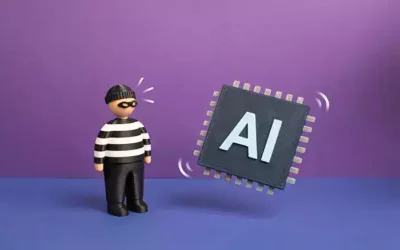

Artificial intelligence is not neutral. It is built by humans, trained on human data, and deployed in human systems. It reflects our priorities, our blind spots, and our biases. The same technology that can diagnose cancer earlier than any doctor can also deny a loan to a qualified applicant because of their zip code. The same chatbot that helps a student learn calculus can also generate convincing misinformation that sways an election.
AI ethics is not a theoretical concern for philosophers. It is a practical reality that affects your money, your privacy, your opportunities, and your safety. Every time an AI system decides which job postings you see, what news appears in your feed, whether your credit card charge is fraudulent, or how long your prison sentence should be, ethical questions are being answered—whether you know it or not.
As an SEO and technology analyst who has studied algorithmic systems for over a decade, I have seen the gap between how AI is marketed and how it actually behaves. The marketing says “intelligent” and “objective.” The reality is statistical pattern recognition, amplified by the scale of automation, inheriting all the flaws of the data it learns from — flaws that will shape the future of AI as much as any breakthrough.
This guide explains the most important ethical concerns about AI in plain language. You do not need a computer science degree. You need to know what questions to ask and what risks to watch for. If the fundamentals are still fuzzy, our understanding AI guide is a good place to begin.
Part 1: Bias and Fairness
The most documented ethical problem in AI is bias. AI learns from historical data. Historical data contains historical biases. AI does not remove those biases. It learns them and often amplifies them. This is one side of the wider picture of the risks and benefits of AI.
How Bias Enters AI Systems
Bias enters at every stage of the AI lifecycle. Training data bias occurs when the data used to train the AI does not represent the population the AI will be used on. A facial recognition system trained mostly on light-skinned faces will perform poorly on darker-skinned faces. Not because it is malicious. Because it never saw enough examples of darker-skinned faces during training.
Label bias occurs when the human-generated labels used to train the AI reflect human prejudice. An AI trained to screen job applicants using historical hiring data will learn historical discrimination. If a company historically hired fewer women for technical roles, the AI will learn that women are less qualified for technical roles. The AI does not know it is learning discrimination. It is just learning patterns.
Algorithmic bias occurs when the AI’s design choices systematically disadvantage certain groups. A credit scoring algorithm might use zip code as a factor. Zip code is a proxy for race and income in many cities. The algorithm is not explicitly using race, but it is using a variable that correlates with race, achieving the same discriminatory outcome.
Real-World Examples
Healthcare algorithms have been shown to systematically under-recommend care for Black patients because the algorithm used past healthcare costs as a proxy for medical need. Black patients had lower costs because they received less care (due to systemic barriers), not because they were healthier. The algorithm learned that lower cost meant lower need. It was wrong, and Black patients suffered.
Hiring algorithms at major tech companies have been shown to penalize resumes that included the word “women’s” (as in “women’s chess club captain”) because the algorithm was trained on historical hiring data dominated by male applicants. The algorithm learned that male-associated words predicted success. It did not learn that the historical data reflected bias, not merit.
Facial recognition systems from leading vendors have been shown to have error rates of less than 1% for light-skinned men and up to 35% for darker-skinned women. These systems are used by law enforcement. False matches can lead to wrongful arrest.
What You Should Know
Bias is not a bug that can be fixed with better code. Bias is a feature of how AI learns from human data. The only way to mitigate bias is deliberate, ongoing effort: diverse development teams, representative training data, regular auditing for disparate impact, and human oversight of high-stakes decisions.
Part 2: Privacy and Surveillance
AI systems thrive on data. The more data, the better they perform. This creates an inherent tension with privacy.
Data Collection at Scale
AI systems collect vast amounts of data about you. Your smart speaker records your voice commands. Your fitness tracker logs your heart rate and sleep patterns. Your navigation app tracks your location history. Your social media feeds analyze your likes, shares, and dwell time. Your email provider scans your messages (for spam filtering and smart reply features).
Most of this data collection is disclosed in privacy policies that no one reads. Most users consent because they have no practical alternative.
Inference and Re-identification
Even anonymized data can be re-identified. Researchers have shown that by cross-referencing anonymized location data with public social media posts, they can identify specific individuals. AI makes re-identification easier, not harder.
More concerning: AI can infer sensitive information you never explicitly shared. An algorithm might predict your political affiliation from your shopping habits, your health status from your typing patterns, or your location history from your social media connections. You did not consent to sharing this inferred data. But it is being collected and used anyway.
Surveillance Capitalism
The dominant business model of the internet is surveillance capitalism: collecting user data to predict and modify behavior, primarily for advertising. AI supercharges this model. Every click, every pause, every scroll is data. AI analyzes that data to predict what you will do next and to design interventions (notifications, recommendations, prices) to change your behavior.
You are not the customer. You are the product being sold to advertisers.
What You Should Know
Privacy is not about having something to hide. It is about control over your information. AI erodes that control because data collection is invisible, inferences are unregulated, and consent is often meaningless. Use privacy tools: ad blockers, tracker blockers (Privacy Badger, uBlock Origin), and privacy-focused alternatives to mainstream services where possible. Assume that anything you do online is being collected and analyzed.
Part 3: Transparency and Explainability
When an AI system makes a decision that affects you, you have a right to know why. In practice, you usually cannot.
The Black Box Problem
Many AI systems, especially deep learning models, are black boxes. You feed in input. You get output. What happens in between is a mathematical soup of billions of parameters. Even the engineers who built the system cannot fully explain why it made a particular decision.
This is fine when the AI recommends a movie. It is not fine when the AI denies your loan application, flags you for a security screening, or recommends a longer prison sentence.
The Right to Explanation
The European Union’s General Data Protection Regulation (GDPR) includes a right to explanation. You have the right to know how an automated decision was made and to contest it. In practice, companies often claim that explaining the decision is impossible because the model is too complex. Regulators are increasingly pushing back, but meaningful explainability remains elusive.
Trade-offs
There is often a trade-off between accuracy and explainability. Simple models (linear regression, decision trees) are easy to explain but less accurate. Complex models (deep neural networks) are more accurate but impossible to explain. Choosing which model to deploy is an ethical decision. Too often, accuracy is prioritized over accountability.
What You Should Know
When an AI system makes a decision that affects you, ask how it was made. If the answer is “we cannot explain it,” ask why a black box was used for a high-stakes decision. Demand transparency. Support regulation that requires explainability for consequential AI decisions.
Part 4: Accountability and Responsibility
When an AI system causes harm, who is responsible? The developer who wrote the code? The company that deployed it? The user who relied on it? The AI itself (which has no legal personhood)?
The Responsibility Gap
Autonomous systems create a responsibility gap. Harm occurs, but no one is clearly at fault. Self-driving car kills a pedestrian. Was it the driver (who was not driving), the manufacturer (who built the car), the sensor supplier, the mapping company, or the regulators who approved the system? The law is still catching up.
Automation Bias
Humans tend to trust automated systems, even when they are wrong. This is called automation bias. A radiologist using an AI diagnostic tool might override their own judgment when the AI disagrees. If the AI is wrong, the radiologist missed the correct diagnosis because they trusted the AI.
Who is responsible? The radiologist? The hospital? The AI vendor? All of them? None of them clearly.
Diffusion of Responsibility
In large tech companies, no single person is responsible for the AI system’s outcomes. The data team collects the data. The modeling team trains the model. The product team deploys it. The legal team approves it. When something goes wrong, everyone points to someone else.
What You Should Know
Accountability requires clear lines of responsibility. Before deploying an AI system in a high-stakes context, ask: who is accountable if this system causes harm? If no one can answer, do not deploy it. Support legal frameworks that treat AI systems as products with liability, not as autonomous agents beyond responsibility.
Part 5: Job Displacement and Economic Impact
AI will automate some jobs and transform many others. The ethical question is not whether this will happen—it is how society will respond.
The Distribution of Impact
Automation does not affect everyone equally. Routine cognitive tasks are most vulnerable. Data entry, customer service triage, basic translation, and simple copywriting are already being automated. These are often entry-level positions held by younger workers and workers without college degrees.
The benefits of AI automation are concentrated among capital owners and highly skilled workers who can leverage AI as a tool. The costs are concentrated among workers whose skills are devalued.
The Transition Problem
Even if AI creates new jobs in the long run (as previous technological revolutions have), the transition is painful. A truck driver whose job is automated cannot become a prompt engineer overnight. Retraining takes time. In the meantime, workers face unemployment, income loss, and social disruption.
What You Should Know
Technological unemployment is not inevitable, but it is a policy choice. Societies can choose to invest in education, retraining, and social safety nets. They can choose to tax automation to fund support for displaced workers. They can choose to shorten workweeks and share the productivity gains broadly. Or they can choose to let the market concentrate wealth and leave workers behind. The technology does not decide. We do.
Part 6: Misinformation and Manipulation
AI makes it easier to create convincing false content and harder to distinguish truth from fiction.
Deepfakes
AI-generated video, audio, and images are increasingly indistinguishable from real recordings. A deepfake video of a politician saying something they never said can go viral before any fact-checking is possible. Audio deepfakes can impersonate a family member asking for money or a CEO authorizing a fraudulent transaction.
AI-Generated Text at Scale
Large language models can generate thousands of plausible-sounding articles, social media posts, and comments in minutes. Bad actors can flood public discourse with misinformation, propaganda, or simply noise, making it harder for genuine voices to be heard and harder for citizens to find reliable information.
The Liar’s Dividend
When convincing fakes are possible, anyone can dismiss real evidence as AI-generated. A politician caught on tape saying something damaging can claim the recording is a deepfake. A journalist’s authentic reporting can be dismissed as AI fabrication. The liar’s dividend is the ability to deny reality by claiming it is fake.
What You Should Know
Trust your senses less. Verify through multiple independent sources. Use reverse image search to check suspicious images. For video and audio, consider the source and the chain of custody. Support media literacy education. Demand platform accountability for AI-generated content.
Conclusion
AI is not inherently good or evil. It is a tool. But tools reflect the values of their creators and the systems in which they operate. The ethical concerns about AI are not technical problems waiting for technical solutions. They are human problems: bias, privacy, transparency, accountability, economic justice, and the integrity of our information environment.
Bias in AI systems is not a bug. It is a feature of learning from biased human data. Mitigation requires deliberate effort: diverse teams, representative data, regular audits, and human oversight. Privacy is eroded by AI’s appetite for data and its ability to infer sensitive information. You have less control over your data than you think, and AI makes that worse.
Transparency is thwarted by black box models that cannot explain their decisions. When an AI denies you a loan or flags you for security, you have a right to know why—a right that current technology often cannot satisfy. Accountability is diffuse. When AI causes harm, no one is clearly responsible. Legal frameworks are still catching up.
Job displacement is real, but the impact is a policy choice. Societies can invest in retraining and safety nets, or they can let the market concentrate wealth. Misinformation is supercharged by AI’s ability to generate convincing fakes at scale. Trust is harder to earn and easier to destroy.
None of these concerns are reasons to abandon AI. They are reasons to engage with it critically, to demand better from developers and deployers, and to build systems that prioritize human welfare over efficiency or profit.
You do not need to become an AI ethicist. You need to know what questions to ask. Is this AI system fair? Have its biases been audited? What data does it collect about me? Can it explain its decisions? Who is accountable when it fails? How will displaced workers be supported? Is this content real or generated?
Ask these questions. Demand answers. The technology is not the future. It is the present. And the present needs your attention.