
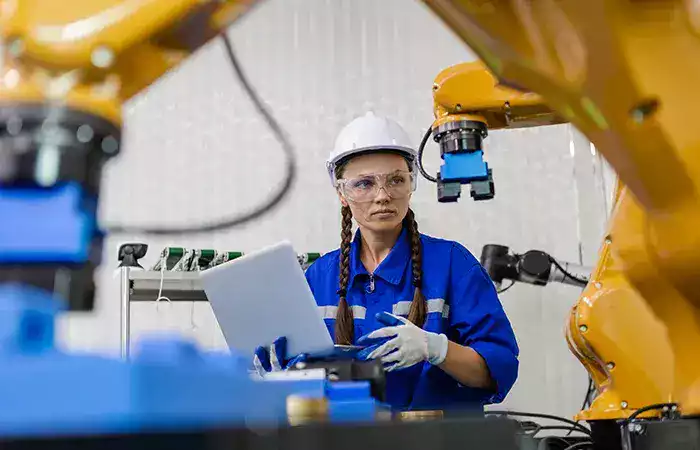
Automation and jobs are closely connected in today’s global economy. From automotive factories in Germany to customer service centers in India, technology is changing how people work, which skills employers need, and how businesses organize their operations.
Industrial robots assemble products, software processes routine documents, and artificial intelligence helps professionals analyze information. These developments can improve productivity, but they also raise important questions about employment, wages, training, and economic opportunity.
Will automation eliminate jobs? Will it create new careers? And will workers in different countries experience the same changes?
The answers depend on the industry, the technology involved, and the economic conditions of each region. Some activities may disappear, others may become easier, and entirely new responsibilities may emerge.
This guide explains how automation is changing jobs around the world, compares its effects across regions, and provides practical steps workers can take to prepare.
What Is Automation and How Does It Affect Jobs?
Automation is the use of technology to perform tasks with reduced direct human involvement. It can involve simple software rules, industrial machinery, robotics, or advanced artificial intelligence. Understanding automation and jobs requires distinguishing between tasks that change, roles that disappear, and new work that emerges.
Automation is not always the same as AI. A machine that repeatedly performs a programmed movement may be automated without using artificial intelligence. An AI system, meanwhile, may analyze information, recognize patterns, or generate content.
For a basic explanation, see our guide to what automation is and how it works.
Three common types of workplace automation
- Industrial automation: Machines and robots perform manufacturing, packaging, or material-handling tasks.
- Software automation: Applications process invoices, transfer information, schedule activities, or complete repetitive digital workflows.
- AI-assisted automation: AI systems help interpret documents, answer questions, classify information, and support decisions.
These technologies can affect employment differently. A factory robot may change physical production tasks, while AI software may transform administrative and professional work.
Four Ways Automation Is Changing Jobs Worldwide
1. Replacing specific repetitive tasks
Activities that follow predictable rules are often suitable for automation. Examples include sorting products, transferring data, generating standard reports, and processing routine transactions.
When a large portion of an occupation becomes automated, employers may reduce certain positions or redesign responsibilities.
2. Changing how existing jobs are performed
Automation can assist workers rather than replace them. A maintenance technician may use automated monitoring to identify equipment problems, while a financial analyst may use software to prepare data for review.
The worker remains responsible for interpreting results and handling situations that require expertise.
3. Creating new responsibilities
Automated systems require installation, maintenance, supervision, testing, cybersecurity, and process improvement.
Organizations may need professionals who understand both technology and the business processes it supports.
4. Changing where work takes place
Digital tools allow some services to be delivered across borders. Businesses may combine remote employees, cloud applications, and automation to serve customers in multiple countries.
However, not every occupation can move online. Construction, transportation, healthcare, and many local services still require physical presence.
How Automation Is Changing Jobs in North America
North America includes highly developed technology industries, extensive manufacturing networks, and service economies that are increasingly adopting automation.
United States: AI and professional services
In the United States, automation affects manufacturing, logistics, finance, healthcare administration, software development, and customer service.
Industrial automation has been part of manufacturing for decades. More recently, AI tools have expanded automation into activities involving documents, communication, programming, and analysis.
For example, a legal team may use software to organize large collections of documents. Accountants may automate transaction classification, while marketing professionals use AI to prepare preliminary drafts.
These changes do not necessarily eliminate entire professions. They can shift the value of work toward judgment, quality control, client relationships, and specialized knowledge.
Mexico: Manufacturing, nearshoring, and technical skills
Mexico’s manufacturing sector is closely connected to North American supply chains. Automotive production, electronics, industrial equipment, and logistics increasingly use automated systems.
Nearshoring may create opportunities for manufacturing investment, but new facilities can also require more advanced technical capabilities.
Employers may seek technicians who can operate automated equipment, diagnose faults, manage quality systems, and maintain industrial networks.
This makes technical education and workforce training important for regions seeking to attract new investment.
Canada: Services, manufacturing, and digital adoption
Canadian organizations use automation in manufacturing, financial services, agriculture, transportation, and administration.
Opportunities include productivity improvements and support for businesses facing labor shortages. Challenges include the cost of adopting technology and ensuring that smaller employers and workers can access relevant training.
Automation and Jobs in Europe
European countries have long used industrial automation, particularly in automotive manufacturing, machinery, and precision engineering.
Germany and advanced manufacturing
German manufacturers use industrial robots, sensors, and automated production systems to improve consistency and efficiency.
Workers may move from repetitive assembly activities toward equipment supervision, programming, maintenance, and quality assurance.
Vocational education and apprenticeship programs can help prepare workers for these responsibilities, although retraining remains an ongoing challenge.
Western Europe and workplace regulation
Across Western Europe, employers are introducing automation into logistics, retail, banking, healthcare administration, and professional services.
Worker protections, privacy requirements, collective bargaining arrangements, and national education systems can influence how organizations adopt new technologies.
Automation may improve productivity, but its effects depend partly on how employers involve employees in workplace changes.
Central and Eastern Europe
Countries with manufacturing and shared-service industries may face both opportunities and challenges.
Automation can help attract investment and improve production capabilities. At the same time, routine business services and repetitive factory activities may become less labor-intensive.
Investment in digital infrastructure and workforce development can influence how effectively these economies adapt.
How Automation Is Transforming Jobs in Asia
Asia contains some of the world’s largest manufacturing centers and rapidly developing technology industries.
China: Robotics and industrial modernization
China uses automation across manufacturing, logistics, and increasingly sophisticated industrial operations.
Robotics can improve production consistency and support industries facing changing labor availability. However, automation may also reduce demand for certain repetitive factory activities.
New opportunities may arise in equipment maintenance, industrial software, engineering, and system integration.
Japan: Automation and an aging workforce
Japan faces demographic pressures associated with an aging population and labor shortages in some sectors.
Automation is used in manufacturing, logistics, and selected service activities to support productivity and reduce repetitive workloads.
Technology can assist workers, but deploying robots in complex environments still presents practical and economic challenges.
South Korea: Advanced manufacturing
South Korea has a highly automated industrial sector, particularly in electronics and automotive manufacturing.
Automation increases demand for certain engineering, maintenance, software, and quality-control skills while changing the nature of repetitive production work.
India: IT services and business process automation
India has a large information technology and business services industry.
AI systems can assist with software development, customer support, document processing, and routine technical tasks.
This creates pressure on some standardized services while offering opportunities in cybersecurity, complex software engineering, AI integration, and specialized business solutions.
Employees who combine technical skills with communication and domain expertise may be better positioned to adapt.
Southeast Asia: Manufacturing and skills development
Countries such as Vietnam, Thailand, Indonesia, and Malaysia participate in global manufacturing and service supply chains.
As companies introduce more automated equipment, workers may need skills in machinery operation, electronics, maintenance, and production management.
The challenge is ensuring that training programs keep pace with changing industrial requirements.
Automation in Latin America and Africa
The impact of automation depends heavily on infrastructure, industry composition, education, and access to investment.
Latin America: Different opportunities across industries
Latin American economies include manufacturing centers, agricultural industries, technology services, tourism, and extensive small-business activity.
In manufacturing, automation may improve efficiency and quality. In services, software can reduce repetitive administrative work.
Agricultural businesses may use sensors, automated irrigation, and data analysis to improve operations.
However, small employers may face barriers involving equipment costs, connectivity, financing, and workforce training.
Africa: Digital services and infrastructure challenges
Automation adoption varies widely across African countries and industries.
Some organizations are expanding digital financial services, agricultural technology, logistics systems, and AI-assisted business processes.
At the same time, unreliable connectivity, limited access to capital, and shortages of specialized training can constrain adoption in certain areas.
Automation may create opportunities for new services, but equitable access to infrastructure and education remains important.
Global Comparison: How Automation Affects Different Regions
| Region | Major areas of automation | Potential opportunities | Key challenges |
|---|---|---|---|
| North America | Manufacturing, logistics, professional services | AI integration and advanced technical work | Workforce transitions and skills gaps |
| Western Europe | Industrial robotics, finance, administration | Advanced manufacturing and process improvement | Training costs and regulatory requirements |
| East Asia | Electronics, automotive production, robotics | Engineering and industrial innovation | Changing demand for routine production work |
| South and Southeast Asia | IT services, manufacturing, business processing | Digital services and technical specialization | Rapidly changing qualification requirements |
| Latin America | Manufacturing, agriculture, administration | Modernized production and digital services | Unequal access to technology and training |
| Africa | Digital finance, agriculture, logistics | New technology-enabled services | Infrastructure and investment limitations |
This comparison illustrates broad patterns rather than predicting the same outcome for every country or worker.
Which Industries Are Most Affected by Automation?
Automation influences both physical and digital work, but the opportunities and risks vary by industry.
| Industry | Examples of automation | How jobs may change |
|---|---|---|
| Manufacturing | Industrial robots and automated inspection | More equipment monitoring and technical maintenance |
| Customer service | Chatbots and automated request routing | Greater focus on complex customer problems |
| Finance | Transaction processing and fraud detection | More exception handling and analytical review |
| Healthcare | Documentation and decision-support tools | More emphasis on clinical oversight and patient care |
| Logistics | Warehouse systems and route optimization | Changes in coordination and equipment supervision |
| Marketing | AI-assisted drafting and campaign analysis | More strategic planning and quality control |
For small companies, automation can also simplify operations. Our guide to AI automation for small businesses provides practical examples.
Will Automation Replace More Jobs Than It Creates?
There is no single answer that applies to every economy. Research from the International Labour Organization on generative AI and jobs indicates that exposure to AI does not necessarily mean full job replacement; many occupations are more likely to see changes in their tasks. This research focuses on generative AI rather than all forms of automation.
Automation may reduce the labor needed for specific tasks while increasing productivity, lowering costs, and supporting new business activities.
Whether these changes lead to more employment depends on demand, investment, education, economic conditions, and how businesses use productivity gains.
Historical technological changes demonstrate that some occupations can decline while others emerge. However, this does not guarantee that every worker or region will benefit equally.
Transitions may be difficult when displaced employees cannot easily move into newly created roles.
For a detailed discussion of this question, read Will AI Replace Jobs? Risks, Skills and New Opportunities.
What Skills Will Workers Need in an Automated Economy?
Technical knowledge can be valuable, but adapting to automation also requires broader professional abilities. The World Economic Forum’s Future of Jobs Report 2025 discusses employer expectations for changing skills and job roles through 2030. Its projections are survey-based expectations, not guaranteed outcomes. For workers, the relationship between automation and jobs makes continuous learning especially important.
Digital literacy
Workers benefit from understanding common software applications, online collaboration tools, data security, and basic digital workflows.
Critical thinking
Automated systems can produce incorrect or incomplete information. Employees need to evaluate outputs and recognize situations requiring additional review.
Problem-solving
Unexpected situations often require identifying causes, considering alternatives, and applying practical judgment.
Communication and teamwork
People must coordinate projects, explain decisions, resolve disagreements, and support customers and colleagues.
Technical specialization
Depending on the occupation, useful skills may include equipment maintenance, industrial controls, data analysis, cybersecurity, or workflow design.
Continuous learning
Workers should periodically review which technologies are affecting their profession and identify realistic learning opportunities.
Explore our articles about what digital skills are and why they matter and essential digital skills to learn.
How Workers Can Prepare for Automation: A Practical Plan
Step 1: Identify repetitive tasks in your current job
List the activities you perform each week. Determine which follow predictable rules and which require experience, judgment, or personal interaction.
Step 2: Learn how automation affects your industry
Review employer requirements, industry publications, professional associations, and relevant training opportunities.
Step 3: Test a useful digital tool
Choose a low-risk activity such as organizing notes, preparing a report outline, or managing routine reminders.
Use approved tools and avoid sharing confidential information without authorization.
Step 4: Develop complementary skills
Strengthen abilities that help you evaluate automated results, communicate with people, and solve complex problems.
Step 5: Document your achievements
Keep examples of completed projects, improved processes, or measurable results. These examples can demonstrate your value to employers or clients.
Step 6: Explore related career paths
Consider opportunities that build on your existing experience. A production worker might pursue equipment maintenance, while an administrative employee might specialize in process coordination.
Step 7: Review your progress regularly
Update your learning plan as technology and job requirements change.
Ethical Challenges of Workplace Automation
Automation raises questions that extend beyond productivity and employment.
Organizations should consider whether automated decisions are fair, whether employee information is protected, and whether workers understand how technology affects their responsibilities.
Important concerns include:
- Fairness: Automated hiring or evaluation systems may produce biased results.
- Privacy: Workplace monitoring tools may collect sensitive information.
- Accountability: Employers need clear responsibility for automated decisions.
- Transparency: Workers should receive appropriate information about consequential uses of automation.
- Training: Employees need reasonable opportunities to develop new skills.
Read our guide to AI ethics and the major concerns surrounding artificial intelligence for a closer look at these issues.
How Automation Could Change Work in the Next Decade
Automation will likely continue expanding into activities involving information processing, digital coordination, and selected physical operations.
More organizations may combine conventional software, robotics, and AI to complete complex workflows.
However, the pace of change will depend on technology reliability, costs, regulation, infrastructure, and public acceptance.
Some businesses may adopt automation quickly. Others may move more slowly because their work involves unpredictable environments, safety requirements, or specialized human relationships.
The future of employment will also depend on choices made by employers, workers, educators, and policymakers.
For a broader perspective, see the future of artificial intelligence over the next ten years.
Frequently Asked Questions About Automation and Jobs
How is automation changing jobs around the world?
Automation is replacing some repetitive tasks, changing existing responsibilities, creating demand for new technical skills, and influencing where certain types of work are performed.
Which countries are most affected by automation?
The effects vary by industry and technology adoption. Countries with advanced manufacturing and digital service industries often experience substantial changes, while other economies face different opportunities and barriers.
Does automation always cause unemployment?
No. Automation can reduce demand for some positions, but it can also support business expansion and create new responsibilities. Outcomes depend on economic conditions and how organizations adopt technology.
What is the difference between automation and artificial intelligence?
Automation uses technology to perform tasks with reduced human involvement. AI is a category of technology that can recognize patterns, generate content, and support predictions or decisions. Some automation uses AI, but not all automation is AI-based.
Can older workers adapt to automation?
Yes. Workers of different ages can learn relevant tools and combine them with existing professional experience. Practical training and accessible learning opportunities are important.
What is the best way to prepare for automation?
Understand how your occupation is changing, develop useful digital skills, strengthen professional judgment, and continue learning throughout your career.
Conclusion: Automation Is Changing Jobs, Not Just Technology
Automation and jobs are connected through a complex global transformation. Industrial robots, software systems, and artificial intelligence are changing how organizations produce goods, deliver services, and manage information.
These changes do not affect every country or occupation in the same way. Advanced manufacturing economies may experience shifts toward technical supervision and maintenance. Service industries may automate routine information processing. Developing economies may find new digital opportunities while facing challenges involving infrastructure and training.
Automation can improve productivity, but its benefits are not automatically shared equally. Workers, businesses, educational institutions, and governments all have roles in managing the transition.
For individuals, the most useful strategy is to understand emerging tools, build adaptable skills, and identify opportunities to combine technology with human expertise.
The future of work will depend not only on what machines can do, but also on how people choose to use them.