For most of human history, health was something that happened at the doctor’s office. You felt unwell, you made an appointment, a professional measured a few things, and you went home with advice. Your health data existed as occasional snapshots, taken months or years apart.
That model is quietly being rewritten. Today, health monitoring happens on your wrist, on your bathroom scale, in your phone, and increasingly through a video call instead of a waiting room. This shift has a name: smart health. It is the movement of health tracking and care out of the clinic and into the connected technology you use every day.
This article is the big-picture overview. We will define what smart health actually is, break down the technology that powers it in plain English, and walk through the main tools you are likely to encounter. Along the way, we link to deeper guides on each piece. Just as importantly, we will be honest about what this technology can and cannot do — because understanding its limits is what turns it from a gimmick into something genuinely useful.
What “smart health” actually means
Smart health is the use of connected digital technology — sensors, apps, data, and AI — to monitor, understand, and manage your health in everyday life, outside the traditional clinical setting.
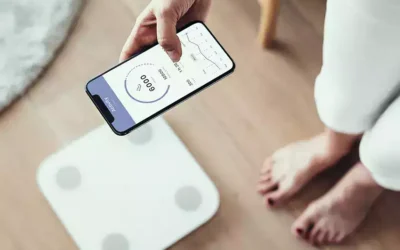
The key word is connected. A regular bathroom scale gives you a number and forgets it. A smart scale records that number, sends it to an app, tracks it over time, and puts it next to your other health data. That connection is what makes it “smart.”
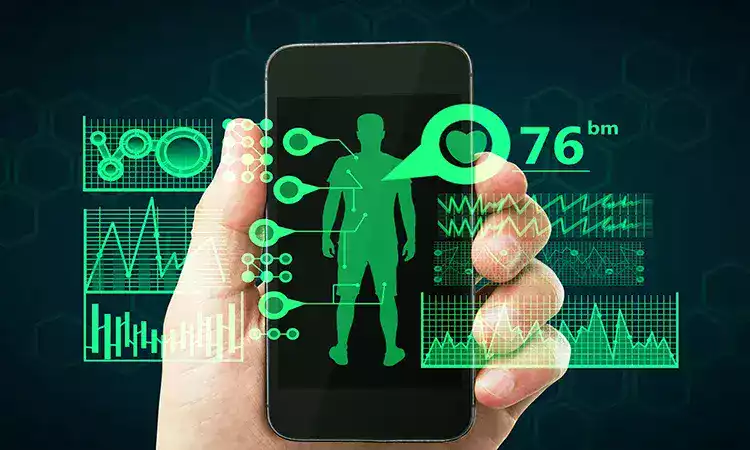
The deeper shift is from snapshots to streams. A yearly checkup captures a single moment. Smart health tools capture continuous data — heart rate through the day, steps, sleep, activity — building a picture over weeks and months rather than minutes. This changes the goal from reacting to problems after they appear toward noticing trends earlier and staying aware of your own baseline. It is health that is continuous, personal, and preventive by design.
The building blocks of health technology
Almost every smart-health product, no matter how different it looks, is built from the same four layers stacked on top of each other.
1. Sensors and devices. This is the hardware that touches your body or measures it: the wearable on your wrist, the smart scale under your feet, the sensor in a fitness ring. Their job is to turn something physical — a heartbeat, a movement, a weight — into digital data.
2. Apps and software. Raw numbers are useless on their own. Apps collect the data, display it in charts you can understand, let you log how you feel, and turn measurements into trends and reminders.
3. Connectivity. The devices, apps, and your data talk to each other over the internet, syncing and storing information in the cloud. This is health technology built on top of the Internet of Things — the same web of connected devices that runs your smart home now runs on your wrist.
4. Intelligence and analytics. The top layer looks for meaning in the data: spotting patterns, comparing you to healthy ranges, and flagging things that look unusual. Increasingly this layer uses artificial intelligence to find signals a human might miss in a stream of numbers.
Understanding these four layers makes every smart-health product easier to read. When you look at any new gadget or app, you are really just asking: what does it sense, how does it show me the data, where does that data go, and what does it do with it?
How the main smart-health technologies work
With the framework in place, here is a tour of the tools you are most likely to meet, and how each one actually works.
Wearables
Wearables are the front door to smart health for most people. A smartwatch or fitness band uses tiny sensors to measure your body continuously: an optical sensor shines light into your skin to estimate heart rate, an accelerometer detects movement to count steps and track sleep, and other sensors measure more. These connected devices are part of the Internet of Things, applied to your body. All of this feeds an app that turns the raw signals into daily trends. Our full guide explains how wearable health devices monitor your body in detail, but the core idea is simple: constant, low-effort measurement you barely notice.
Smart scales and connected devices
Smart scales extend the same idea to measurements you take standing still. Beyond weight, many use a harmless technique called bioimpedance — sending a tiny electrical signal through your body to estimate other metrics — and then sync everything to an app so you can see changes over time rather than isolated numbers. The value is in the trend and the automatic record-keeping. You can read more on how smart scales track body metrics. As with all consumer devices, treat the numbers as useful signals to observe, not precise clinical readings.
Health and tracking apps
If devices are the sensors, apps are the brain and the memory. Health apps pull data from your wearables and scales, let you log symptoms, medications, and how you feel, and organize it into something readable. They are especially valuable for people managing an ongoing condition, where a consistent record matters. Our guide on how health apps help you track chronic conditions covers this in depth. Even without any extra hardware, an app plus your phone’s built-in sensors is often a complete starting point.
Telemedicine
Not all smart health is about tracking your body — some of it is about reaching care more easily. Telemedicine replaces the trip to the waiting room with a secure video or phone consultation, connecting you to a professional from home. It relies on the same connectivity backbone as everything else, and it has quietly widened access for people in remote areas, with limited mobility, or with busy schedules. See how telemedicine is changing access to healthcare for the full picture.
AI in health
The newest layer is artificial intelligence. In smart health, AI mostly does one thing well: it recognizes patterns across large amounts of data. Trained on many examples, it can flag readings that look unusual for you, highlight trends worth attention, and help surface early signals. The important framing is that these tools assist, they do not diagnose. Our guide on how AI health tools assist early risk detection explains both the promise and the guardrails. AI in health is a smart assistant pointing at things worth a closer look — not a replacement for a trained professional.
What smart health can and cannot do
This is the most important section, because the value of these tools depends entirely on using them with realistic expectations.
What smart health does well:
- Continuous awareness. It shows you your own baseline and how it changes, instead of a single yearly snapshot.
- Convenience and access. Measurements happen automatically; consultations can happen from home.
- Early signals. Trends and unusual readings can prompt you to seek care sooner.
- Consistency. Automatic logging beats memory, which is a real advantage for managing ongoing conditions.
What smart health cannot do:
- It cannot diagnose. Consumer devices flag and estimate; they do not deliver medical conclusions. A worrying reading is a reason to consult a professional, not a verdict.
- It is not medical-grade. Consumer sensors are impressively good but less precise than clinical equipment. Treat the numbers as trends, not exact truth.
- It does not replace professionals. These tools work best alongside real medical care, not instead of it. Human judgment catches what algorithms and sensors miss.
- It collects sensitive data. Health information is among the most personal data you can generate. Before trusting an app, it is worth understanding how to protect your personal data, because where your health data goes matters as much as what it measures.
Getting started wisely
You do not need to buy everything at once. The smartest way in is to start with a single need — better sleep awareness, tracking a condition, easier access to a doctor — and choose one tool that fits it. Let it become a habit before adding more.
Two mindsets keep smart health healthy. First, check the privacy terms before you connect anything; you are trading data for insight, so know the trade. Second, use the data to build awareness, not anxiety. The numbers are there to inform you and to prompt a professional conversation when something looks off — not to replace one, and not to obsess over. Used with that balance, these tools genuinely help.
Conclusion
Smart health is the quiet migration of health monitoring and care from the clinic into your everyday connected technology. At its core, it is built from four simple layers: sensors that measure your body, apps that make the data readable, connectivity that ties it together, and intelligence that looks for meaning. Once you can see those layers, every wearable, scale, app, and AI feature becomes easy to understand — you just ask what it senses, where the data goes, and what it does with it.
The tools themselves are remarkable. A device on your wrist can track your heart around the clock. An app can turn scattered readings into a clear trend. A video call can put a doctor in your living room. AI can flag a signal buried in months of data. Each of these deserves a closer look, and our deep-dive guides on wearables, smart scales, health apps, telemedicine, and AI health tools walk through them one by one.
But the technology is only as good as the way you use it. Smart health gives you continuous awareness, convenience, and earlier signals — genuine advantages over the old snapshot model. It does not diagnose, it is not medical-grade, and it does not replace the judgment of a trained professional. The healthiest approach treats these tools as a well-informed complement to real care: start small, guard your data, watch the trends, and bring anything concerning to a person, not just a screen. Do that, and smart health stops being a collection of gadgets and becomes what it was meant to be — a quiet, everyday partner in understanding your own body.