Catching a health problem early can be the difference between a simple treatment and a catastrophic outcome. A heart attack that is predicted and prevented versus one that arrives without warning. A cancer detected at stage I with a 90% five-year survival rate versus stage IV with a 10% rate. A diabetic complication avoided through early warning versus amputation or blindness.
The promise of early detection has always been compelling, but the tools have been limited. Routine checkups happen once a year at most. Symptoms often appear only after a disease has progressed. And subtle warning signs—a slight change in heart rhythm, a barely perceptible decline in kidney function, a shift in sleep patterns—are invisible to the patient and easily missed by busy clinicians.
AI health tools are changing this. Machine learning models can now analyze medical images, electronic health records, wearable sensor data, genetic information, and even smartphone typing patterns to identify early signs of disease that no human could see. These tools do not replace doctors. They augment them, acting as a tireless second set of eyes that never gets tired, distracted, or rushed.
As an SEO and health AI analyst who has evaluated dozens of clinical AI tools and spoken with physicians who use them daily, I have seen the transformation. The technology is maturing rapidly. The safety protocols are becoming standardized. And the evidence base is growing.
But AI health tools also carry risks. False alarms cause unnecessary anxiety and medical procedures. Algorithmic bias can miss disease in underrepresented populations. Over-reliance on AI can erode clinical skills. And poorly validated tools marketed directly to consumers can do more harm than good.
This article will explain how AI health tools assist early risk detection safely. You will learn what these tools actually do, where the evidence is strongest, how to evaluate them, and what safety guardrails matter most.
Part 1: What AI Health Risk Detection Actually Does
AI health risk detection is not a single technology. It is a category of tools that use machine learning to identify patterns associated with disease before symptoms appear or before conventional tests would catch them.
Medical Imaging Analysis
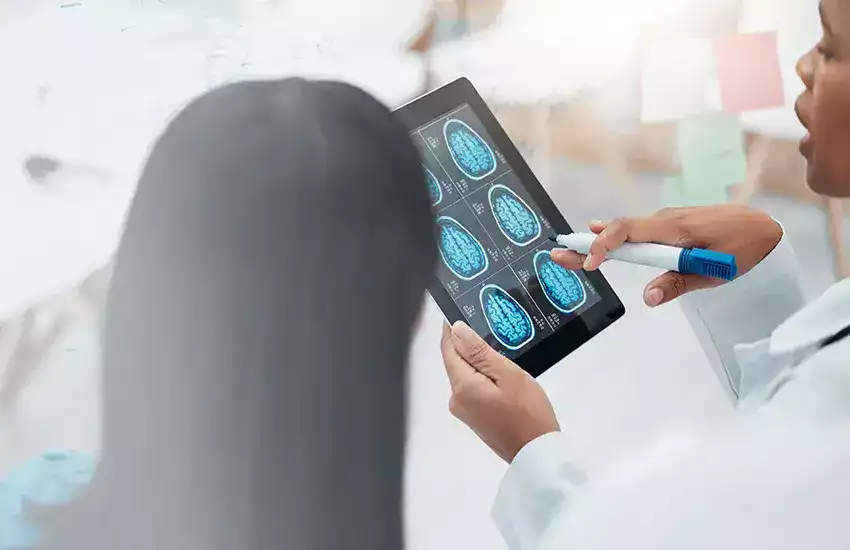
The most mature and clinically deployed category is AI for medical imaging. Deep learning models are trained on hundreds of thousands of labeled X-rays, CT scans, MRIs, and mammograms. They learn to detect abnormalities that radiologists might miss.
Lung cancer screening: AI models analyzing chest CT scans detect suspicious lung nodules with sensitivity comparable to or exceeding experienced radiologists. In clinical trials, AI-assisted reading found more early-stage lung cancers than radiologist reading alone.
Breast cancer screening: Multiple AI mammography tools have been approved by the FDA. Studies show they reduce false positives (unnecessary callbacks for further testing) and false negatives (missed cancers) compared to radiologist reading alone. Some European trials now use AI as the first reader, with radiologists reviewing only cases the AI flags as suspicious.
Diabetic retinopathy: AI systems can analyze retinal photos to detect signs of diabetic eye disease. The FDA has approved fully automated systems that provide a diagnosis without any human interpretation. A primary care doctor can photograph a patient’s retina during a routine visit, and the AI determines whether the patient needs referral to an ophthalmologist.
Stroke detection: AI models analyzing brain CT or MRI scans can identify large vessel occlusion strokes within minutes, alerting stroke teams before the patient even arrives at the hospital. Every minute saved reduces brain damage.
Electronic Health Record (EHR) Analysis
AI models can scan years of a patient’s medical records—labs, vital signs, medications, diagnoses, visit patterns—to identify subtle patterns that predict future disease.
Sepsis prediction: Sepsis is a life-threatening response to infection that kills hundreds of thousands annually. Early treatment saves lives, but sepsis is difficult to recognize in its early stages. AI models that monitor hospitalized patients’ vital signs, lab results, and clinical notes can predict sepsis hours before clinical deterioration, enabling earlier antibiotic administration and intensive care.
Acute kidney injury: AI models analyze creatinine trends, medication administration, and vital signs to predict which hospitalized patients will develop acute kidney injury up to 48 hours before standard lab criteria would diagnose it. Earlier recognition allows protective interventions.
Readmission risk: AI models predict which patients are likely to be readmitted to the hospital within 30 days of discharge. This allows care teams to focus post-discharge resources—phone calls, home visits, medication reconciliation—on highest-risk patients.
Wearable and Sensor Data Analysis
Consumer wearables generate continuous streams of heart rate, step count, sleep patterns, and sometimes blood oxygen, ECG, and temperature. AI models analyze these streams to detect deviations that may indicate early disease.
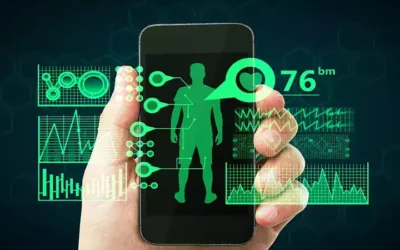
Atrial fibrillation detection: Apple Watch, Fitbit, and other wearables use AI to analyze heart rhythm data from their optical sensors. When irregular rhythm is detected, the device alerts the user to take an ECG (on models with electrical sensors) or seek medical evaluation. This approach has identified asymptomatic atrial fibrillation in thousands of users, enabling stroke-preventing treatment.
COVID-19 early warning: Studies using data from Fitbit, Apple Watch, and Oura Ring showed that AI models could detect COVID-19 infection up to 48 hours before symptoms appeared, based on changes in resting heart rate, heart rate variability, and sleep patterns. Similar approaches are being developed for other respiratory infections.
Parkinson’s disease detection: AI models analyzing smartphone typing patterns, voice recordings, and gait data from wearables can detect early signs of Parkinson’s disease years before clinical diagnosis. Early detection enables participation in clinical trials of neuroprotective therapies.
Genomic and Proteomic Analysis
AI can analyze genetic and protein markers to estimate disease risk years or decades in advance.
Polygenic risk scores: AI models combine information from thousands of genetic variants to estimate an individual’s genetic risk for conditions like heart disease, breast cancer, type 2 diabetes, and Alzheimer’s disease. These scores are probabilistic, not deterministic. A high risk score does not mean you will develop the disease, but it may justify earlier or more intensive screening.
Proteomic aging clocks: AI models analyzing patterns of thousands of proteins in a single blood sample can estimate biological age (how old your body appears at the molecular level) versus chronological age. Discrepancies may indicate accelerated aging and increased risk for age-related diseases.
Part 2: The Evidence — Which AI Risk Detection Tools Actually Work
The AI health space is crowded with claims. Here is what the evidence actually supports.
Strong Evidence (Ready for Clinical Use)
AI mammography for breast cancer detection: Multiple large prospective studies show AI improves cancer detection rates and reduces false positives. The MASAI trial (2023) found that AI-supported screening detected 20% more cancers than standard double-reading by radiologists, with no increase in false recalls.
AI for diabetic retinopathy screening: The FDA-cleared IDx-DR system has been validated in primary care settings. Sensitivity (catching true disease) exceeds 85%. Specificity (correctly ruling out disease) exceeds 90%. Comparable to specialist ophthalmologists.
AI for atrial fibrillation detection from wearables: The Apple Heart Study (2019) enrolled over 400,000 participants. Among those who received irregular rhythm notifications, 84% had atrial fibrillation on subsequent ECG patch monitoring. The positive predictive value was lower than clinical ECG but sufficient for population screening.
Moderate Evidence (Promising, More Validation Needed)
AI for lung cancer nodule detection: Studies show AI matches or exceeds radiologist performance in controlled settings. Prospective randomized trials demonstrating improved patient outcomes (fewer late-stage diagnoses, lower mortality) are ongoing but not yet complete.
AI for sepsis prediction: Multiple hospital systems have deployed AI sepsis alerts. Evidence of clinical benefit is mixed. Some studies show earlier antibiotic administration and lower mortality. Others show alert fatigue (clinicians ignoring frequent false alarms) and no outcome improvement. Implementation quality matters as much as algorithm performance.
AI for COVID-19 prediction from wearables: The DETECT study (2021) showed wearables + AI could detect COVID-19 before symptoms. But performance varied across devices and populations. Not yet ready for population screening without confirmatory testing.
Limited or Mixed Evidence (Not Ready for Clinical Use)
AI for suicide risk prediction: Models analyzing EHR data can identify patients at elevated suicide risk. However, positive predictive value is very low (many false positives). In practice, these tools have not reduced suicide rates and may cause unintended harm (overtriaging low-risk patients, stigmatizing high-risk groups).
AI for rare disease diagnosis: Some AI tools claim to diagnose rare diseases from facial photographs or symptoms. Validation studies are small. Performance in real-world settings with diverse populations is unknown.
Part 3: The Safety Risks — What Can Go Wrong
AI health tools are powerful but not harmless. Understanding the risks is essential for safe use.
False Alarms (False Positives)
An AI tool flags a problem that is not actually present. The patient undergoes unnecessary testing, experiences anxiety, and may receive unnecessary treatment.
Example: A wearable detects an “irregular rhythm” that is actually motion artifact. The user visits a cardiologist, wears a 30-day monitor, undergoes an echocardiogram, and ultimately learns nothing is wrong. Thousands of dollars and weeks of anxiety for a false alarm.
Mitigation: Good AI tools report confidence scores. They do not trigger alerts on borderline findings. They are validated on diverse populations to understand real-world false positive rates.
Missed Disease (False Negatives)
The AI tool fails to detect a disease that is present. The patient is falsely reassured and delays seeking care.
Example: An AI mammography tool misses a small cancer that a human radiologist would have caught. The patient is told “no abnormalities found.” The cancer grows for another year before being detected at a later stage.
Mitigation: AI should be used as an assistant, not a replacement. Human oversight remains essential. The best tools are those that augment human performance, not those that attempt to replace it.
Algorithmic Bias
AI models trained on data from one population may not perform well on other populations. If training data is mostly white, male, and urban, the model may miss disease in women, people of color, or rural patients.
Example: A widely used algorithm for predicting which patients need additional medical support was found to be systematically biased against Black patients. It used past healthcare costs as a proxy for illness severity, but Black patients had lower costs because they received less care, not because they were healthier.
Mitigation: AI health tools must be validated on diverse populations before deployment. Ongoing performance monitoring should track accuracy across demographic subgroups. Development teams should include diverse perspectives.
Over-Reliance and Deskilling
Clinicians who use AI tools may become less skilled at the tasks the AI performs. If the AI fails, the human may not be prepared to catch the error.
Example: Radiologists who rely on AI for nodule detection may become less proficient at finding nodules without AI. If the AI misses a nodule, the radiologist might miss it too.
Mitigation: AI tools should be designed to support, not replace, clinical judgment. Training should emphasize when to trust AI and when to override. Periodic assessments of unaided clinical skills maintain competence.
Direct-to-Consumer Risks
Consumers can now access AI health tools without any clinician involvement. This is the highest-risk category.
Examples: Apps that claim to diagnose skin cancer from a smartphone photo. Genetic tests that claim to predict disease risk without genetic counseling. Wearable algorithms that claim to detect sleep apnea or arrhythmias without validation.
Risks: False reassurance (you ignore real symptoms because the app said you are fine). Unnecessary anxiety (you obsess over an abnormal result that is actually noise). Unnecessary medical procedures (you demand a biopsy based on an unvalidated app result).
Mitigation: Regulators are beginning to scrutinize direct-to-consumer AI health tools. The FDA has cleared specific products for specific uses. Consumers should only use tools with FDA clearance or CE marking and should discuss results with a clinician.
Part 4: How to Use AI Health Tools Safely — A Practical Guide
For consumers considering AI health tools, follow these safety guidelines.
For Wearable-Based Risk Detection
Use wearables as trend trackers, not diagnostic devices. A single “irregular rhythm” notification is likely a false alarm. Repeated notifications over days are worth discussing with your doctor.
Do not make medical decisions based solely on wearable data. If your wearable suggests a problem, the next step is a clinical-grade test (ECG, blood pressure measurement, etc.), not self-treatment.
Share your wearable data with your doctor. Many electronic health records now accept data imports from consumer devices. Your doctor can help interpret what is meaningful versus noise.
For Imaging-Based AI (Mammography, Lung, Retina)
Use only FDA-cleared or CE-marked tools. These have undergone clinical validation. Avoid apps that claim to diagnose skin cancer or other conditions from smartphone photos — none are adequately validated.
Understand that AI is an assistant to the radiologist, not a replacement. A normal AI reading does not guarantee no disease. Continue recommended screening schedules (annual mammograms, etc.) regardless of AI results.
For Genomic Risk Scores
Polygenic risk scores are probabilistic, not deterministic. A high risk score for breast cancer means your risk is elevated relative to the population, not that you will develop cancer. Discuss results with a genetic counselor before making medical decisions.
Do not use direct-to-consumer genetic risk scores without clinical validation. Many consumer genetic tests report risk scores that have not been validated in independent populations. The results may be misleading.
For Consumer Apps Claiming Risk Detection
Verify FDA clearance or CE marking. If the app does not display regulatory approval, it has not been validated for clinical use. Do not trust it.
Discuss any concerning app result with a doctor before taking action. Do not initiate treatments, stop medications, or cancel scheduled screenings based on app results.
Conclusion
AI health tools are transforming early risk detection. Machine learning models can now find lung nodules on CT scans that radiologists might miss, predict sepsis hours before clinical deterioration, detect atrial fibrillation from a watch on your wrist, and analyze retinal photos for diabetic eye disease — the cutting edge of how health tech works.
The evidence is strongest for medical imaging analysis (mammography, lung cancer screening, diabetic retinopathy) and wearable-based arrhythmia detection. These tools have been validated in large clinical studies and are already improving patient outcomes. For other applications—sepsis prediction, readmission risk, genomic risk scores—the evidence is promising but still evolving.
But AI health tools also carry real risks. False alarms cause unnecessary anxiety and medical procedures. False negatives provide false reassurance. Algorithmic bias can miss disease in underrepresented populations. Over-reliance on AI can erode clinical skills. And direct-to-consumer tools that bypass clinical oversight are the highest-risk category.
Safe use of AI health tools requires understanding what each tool actually does, what the evidence supports, and where the risks lie. For consumers, the safety guidelines are clear: use FDA-cleared or CE-marked tools only, discuss results with a doctor before acting, treat wearable data as trends not diagnoses, and continue recommended screening schedules regardless of AI results. For healthcare systems, the priorities are rigorous validation on diverse populations, ongoing performance monitoring, human oversight of AI recommendations, and maintaining clinical skills alongside AI augmentation.
The goal of AI in health is not to replace clinicians. It is to give them superpowers: to see what they cannot see, to remember what they might forget, to prioritize what matters most — understanding how AI works makes that clearer. A radiologist using AI catches more cancers. A primary care doctor using AI refers more patients to ophthalmology before they go blind. A hospital using AI treats sepsis hours earlier.
Early detection saves lives. AI makes early detection more accurate, more accessible, and more scalable. Used safely, with appropriate guardrails and clinical oversight — and alongside everyday health tracking apps — AI health tools will prevent suffering on a scale we are only beginning to imagine. The technology is ready. The evidence is growing. The task now is deploying it safely, equitably, and at scale.