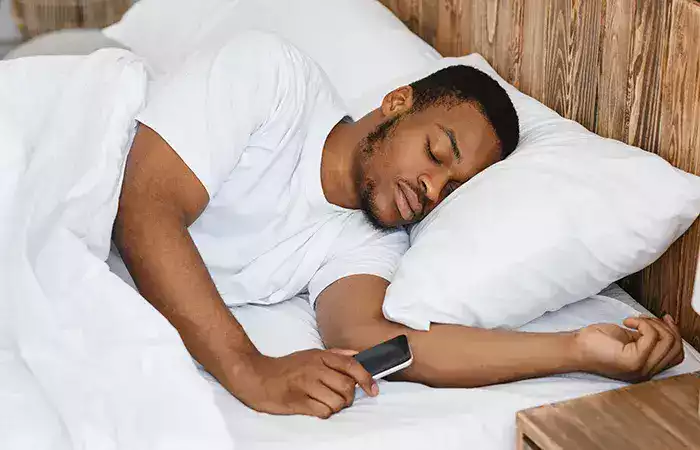
Millions of people now go to bed wearing a watch or ring that quietly measures their sleep, then wake up to a score and a colourful chart of their night. It has become one of the most popular features of modern health technology. But it raises an obvious question: how can a small device on your wrist possibly know when you fell asleep, when you were dreaming, or how well you rested?
The answer is a clever mix of sensors and educated guesswork — and understanding it changes how much you should trust the numbers. This guide explains, in plain English, how sleep tracking actually works, what the data can genuinely tell you, and the important limits to keep in mind. It is one of the everyday applications of smart health, and it usually rides on the same wearable devices that track the rest of your body.
What sleep tracking actually is
Sleep tracking is the use of sensors to estimate your sleep patterns — how long you slept, how often you woke, and roughly what stages of sleep you passed through. The key word there is estimate. Your device is not directly observing your brain or officially recording that you are asleep. It is measuring signals from your body and using them to make an informed guess about what your sleep looked like.
That distinction shapes everything about how to read the results. A sleep tracker is a smart estimator, not a medical instrument. It gathers clues, applies clever software, and produces its best interpretation of your night. Once you see it that way, the technology becomes both impressive and appropriately humble.
How devices detect sleep
To make its estimate, a tracker relies on a handful of sensors, each contributing a different clue about your state.
The most fundamental is movement. Wearables contain an accelerometer — the same motion sensor that counts your steps — and it plays a central role at night. When you are awake, you move relatively often; as you fall asleep, your movements become fewer and smaller; in deep sleep, you are almost perfectly still. By watching how much and how you move, a tracker can make a good first guess about whether you are awake or asleep, and how deeply.
Movement alone is not enough, though, so modern trackers add heart rate. Using an optical sensor that shines light into your skin to read your pulse, the device notices that your heart rate drops and steadies as you sleep, and shifts in characteristic ways between different sleep stages. Some devices go further, estimating your breathing rate from these same signals, and a few track skin temperature, which changes across the night. By combining movement, heart rate, and sometimes breathing and temperature, the tracker’s software builds a far richer picture than any single sensor could — and turns those raw signals into the sleep summary you see in the morning.
Sleep tracking also comes in several forms, and the device you use affects the experience. A smartwatch or fitness band is the most common, tracking sleep as part of monitoring your whole day. A smart ring does much the same in a smaller, more comfortable package that many people find easier to wear to bed. Contactless trackers take a different approach entirely: a sensor pad placed under your mattress, or a bedside device, estimates your sleep from movement and breathing without you wearing anything. And phone apps can attempt basic tracking using the phone’s microphone and motion sensors when placed on the mattress, though without body sensors they are the least precise. More sensors, worn closer to your body, generally mean a more detailed estimate.
The sleep stages it tries to track
You have probably seen your sleep broken into stages — light, deep, and REM — and wondered how a wristband could possibly know the difference. It is doing its best to infer them from the sensor clues.
Very briefly, light sleep is the largest portion of the night and the easy-to-wake stage. Deep sleep is the still, restorative stage where your body recovers, marked by a low, steady heart rate and almost no movement. And REM sleep — associated with vivid dreaming — has its own signature, including a more variable heart rate despite your body staying still. Trackers look for these tell-tale patterns in your movement and heart rate and label each part of the night accordingly.
It is worth being honest here: guessing sleep stages from a wrist sensor is genuinely hard, and this is where consumer trackers are least accurate. A proper sleep laboratory measures brain waves directly to identify stages; your watch is inferring them from indirect signals. The stage breakdown is a useful rough impression, not a precise medical reading.
What sleep tracking can tell you
Used with realistic expectations, sleep tracking offers real value — and that value lies mostly in trends over time, not in any single night.
By tracking night after night, the data can reveal patterns you would never notice otherwise: whether your sleep is consistent or all over the place, how weekends differ from weekdays, and whether changes you make — a new bedtime, cutting late caffeine, a darker room — seem to line up with better or worse nights. It gives you awareness, turning a vague sense of “I slept badly” into a visible pattern you can actually reflect on. That awareness alone nudges many people toward healthier habits, simply because they can finally see their sleep instead of guessing at it. This is exactly the kind of long-term, everyday insight that health-tracking apps are good at.
Many trackers also boil the whole night down into a single sleep score — a number out of a hundred meant to sum up how well you slept. It can be a handy shortcut for spotting good and bad stretches at a glance, but it is worth knowing that each brand calculates its score differently, using its own private formula that blends duration, restlessness, heart rate, and consistency. That is why two devices can rate the same night quite differently. Treat the score as one company’s rough opinion of your night, useful for tracking your own trend over time, rather than an objective grade you need to chase.
The limits: it estimates, it does not diagnose
This is the most important section, because misunderstanding it causes real problems. A consumer sleep tracker is not a medical device, and it comes with genuine limits you must respect.
Its accuracy is imperfect, especially for sleep stages, and it can be fooled — lying still while awake can read as sleep, and restless sleep can be misjudged. Different brands often disagree about the same night, precisely because each is estimating in its own way. Most importantly, a tracker cannot diagnose anything. It cannot tell you whether you have a sleep disorder, and a worrying-looking chart is a reason to talk to a professional, not a diagnosis in itself. If you consistently sleep poorly, feel exhausted, snore heavily, or suspect a problem, a doctor and, where appropriate, a proper sleep study are the right tools — not a wristband. This is the same principle that runs through all of smart health: these tools assist and inform, but they do not replace professional care, and AI-assisted health tools are held to the same standard.
There is one more subtle risk worth naming: fixating on the numbers can backfire. Some people become so anxious about achieving a “good” sleep score that the worry itself harms their sleep. The data is meant to inform you gently, not to stress you. If a tracker is making you more anxious about sleep rather than less, that is a sign to loosen your grip on the numbers.
How to use sleep tracking well
The healthiest way to use a sleep tracker is to treat it as a gentle guide rather than a judge. Focus on the long-term trends instead of obsessing over any single night, since one odd night means very little. Use it to experiment: change one habit and watch whether your patterns shift over a couple of weeks. Above all, let how you actually feel be the final word — if you feel rested, a mediocre score does not mean you slept badly, and if you feel exhausted despite a great score, trust your body over the app. The tracker is one input among several, not the truth about your night. Used that way, it becomes a helpful companion for building better sleep habits without becoming a source of stress.
One genuinely handy feature worth mentioning is the smart alarm many trackers offer. Because the device is already estimating whether you are in light or deep sleep, it can try to wake you during a lighter phase within a window you set — say, any time in the last half hour before your deadline — so you feel less groggy than an alarm that jolts you out of deep sleep. Like everything else here it is an estimate rather than a guarantee, but many people find it a more pleasant way to wake, and it is a nice example of the tracking data quietly doing something useful for you.
Conclusion
Sleep tracking is a genuinely clever piece of everyday health technology. By combining movement, heart rate, and sometimes breathing and temperature, a small device on your wrist or finger can make an informed estimate of when you slept, how often you stirred, and roughly which stages you moved through. That is an impressive feat from such simple sensors — but the operative word is always estimate. Your tracker is making an educated guess, not taking a medical measurement.
That is exactly why its real value lies in trends rather than single nights. Watched over weeks, sleep data reveals patterns and shows whether your habits are helping or hurting, giving you an awareness that quietly encourages better sleep. What it cannot do is diagnose a disorder or replace professional care, and its stage-by-stage breakdown is a rough impression rather than a precise truth. Persistent problems belong with a doctor, not an app.
Use a sleep tracker as a friendly guide — focus on the trends, experiment with your habits, and let how you feel have the final say — and it becomes a useful part of a healthier routine. Let it stress you with scores, and it defeats its own purpose. Understood and used wisely, sleep tracking is smart health at its best: informative, motivating, and always in service of the real goal, which is simply resting better. For the bigger picture, our guide on what smart health is puts it in context.