Discover how voice assistants like Alexa and Siri work.
“Hey Siri, what’s the weather today?” “Alexa, play my morning playlist.” “Okay Google, how old is Morgan Freeman?”
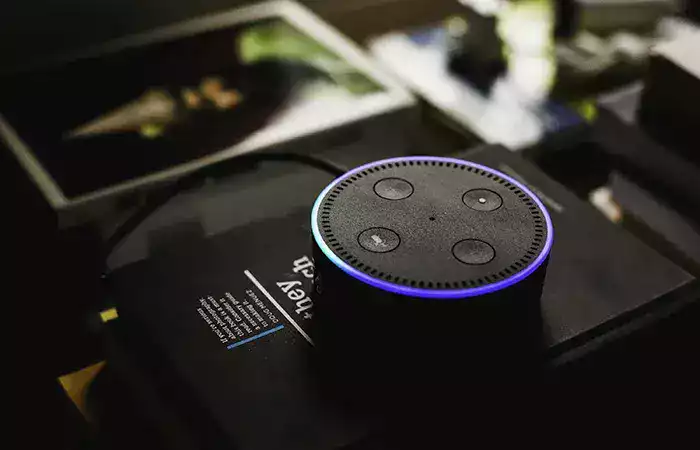
These phrases have become so routine we barely register the miracle. You speak a few words into the air, and a tiny cylinder on your kitchen counter responds with the correct answer, in a natural human voice, often before you finish your coffee. It feels simple. It is anything but.
Behind that seamless interaction lies a multi-stage pipeline of artificial intelligence, acoustic modeling, natural language processing, and cloud computing. Understanding how voice assistants like Alexa, Siri, and Google Assistant actually understand you is a journey into the frontiers of machine learning. Let’s trace the path of a single voice command from your lips to the assistant’s reply.
Stage 1: The Wake Word—Always Listening, Selectively Hearing
Your smart speaker is always listening. That’s not a privacy scandal; it’s a technical requirement. But it’s listening in a very limited, very specific way.
Local Processing on a Low-Power Chip
Voice assistants operate on a low-power audio processor that runs continuously, even when the main processor is asleep. This chip is designed to do exactly one thing: listen for the wake word. For Amazon’s Alexa, that word is packaged with the default “Alexa,” though “Computer,” “Echo,” or “Ziggy” can be substituted for those tired of accidental triggerings. For Apple, it’s “Hey Siri.” For Google, it’s “Hey Google” or “OK Google.”
This wake word detection runs entirely locally on the device. No audio is transmitted to the cloud until the wake word is detected. The processor analyzes audio in a continuous loop, comparing sound patterns against a tiny, highly optimized neural network model trained exclusively to recognize that specific phonetic sequence.
Neural networks make this type of recognition possible by learning patterns from large amounts of training data instead of relying only on fixed programming rules. During training, the network learns which combinations of sound characteristics are associated with the wake word and uses those learned patterns to evaluate new audio. Our guide to what a neural network is explained in plain English shows how these models learn from data and why they are so useful for tasks such as speech, image, and pattern recognition.
The Acoustic Fingerprint Challenge
Wake word detection must work in noisy kitchens, over blaring televisions, through different accents, and at varying distances. Engineers train these models on thousands of hours of diverse speech—different ages, genders, dialects, and background noise conditions. The model learns to isolate the wake word’s acoustic fingerprint from ambient chaos. When the confidence score exceeds a threshold, the device wakes up and begins recording.
Stage 2: Audio Capture and Preprocessing
Once the wake word triggers the device, the following few seconds of audio get captured and prepared for transmission.
Beamforming and Noise Reduction
Smart speakers use multiple microphones arranged in an array, typically 3 to 7 positioned around the device. A technique called beamforming uses the tiny time differences in when sound reaches each microphone to determine the direction of the speaker’s voice. The device digitally focuses on that direction while suppressing noise sources from other angles. Additional algorithms strip out steady background noise like fans, air conditioners, or traffic hum. Acoustic echo cancellation removes the device’s own audio output—critical when you issue a command while the speaker is already playing music.
Digitizing the Waveform
Sound is an analog pressure wave. Computers process binary digits. The analog-to-digital converter samples the cleaned audio signal thousands of times per second, typically at 16 kilohertz or higher for speech applications. Each sample captures the amplitude of the sound wave at that instant. The result is a stream of numbers representing your spoken command.
Stage 3: Automatic Speech Recognition—Sound to Text
The digitized audio is compressed and transmitted to the cloud, where the heavy computational lifting begins. The first and most critical cloud stage is Automatic Speech Recognition, or ASR.
The Acoustic Model
The ASR system first passes the audio through an acoustic model. This deep neural network has been trained on millions of hours of labeled speech data. It breaks the audio stream into tiny overlapping segments, typically 25 milliseconds each, and attempts to identify which phoneme—the smallest unit of meaningful sound—is present. Is that segment a “b” sound, a “p” sound, or an “m”? The model outputs a probability distribution across all possible phonemes for each slice of audio.
The Language Model
Raw phoneme sequences are ambiguous. The phrase “recognize speech” and “wreck a nice beach” contain nearly identical sound patterns. The language model solves this. Trained on vast corpora of text, it understands which word sequences are probable in the English language. It combines the acoustic model’s phoneme predictions with statistical knowledge of word patterns, grammar, and context. The system searches through the space of possible transcriptions to find the sentence that maximizes the joint probability of matching the audio and forming a coherent English utterance.
End-to-End Approaches
Modern ASR systems increasingly use end-to-end deep learning models that bypass the traditional acoustic-model-plus-language-model architecture entirely. These transformer-based systems take spectrograms—visual representations of audio frequencies over time—as input and directly output text sequences. Whisper, OpenAI’s open-source ASR model, exemplifies this approach and has significantly reduced word error rates across diverse languages and acoustic conditions.
Stage 4: Natural Language Understanding—Text to Intent
Transcribing the words is only halfway. The raw text “what’s the weather like in Chicago tomorrow” must be converted into a machine-executable instruction. This is Natural Language Understanding, or NLU.
Intent Classification and Slot Filling
The NLU system performs two simultaneous tasks. First, it classifies the overall intent: this is a weather request. Second, it extracts the relevant slots, or parameters: the location is “Chicago” and the date is “tomorrow.” The assistant’s NLU model is trained to recognize hundreds of distinct intents across dozens of domains—weather, music, timers, smart home, general knowledge, and more. Those smart home commands are the voice layer of what a smart home is.
Context and Coreference Resolution
Conversational context adds complexity. If you ask “Who directed Inception?” followed by “How old is he?”, the assistant must resolve “he” to Christopher Nolan. This coreference resolution is handled by maintaining a short-term dialogue state that tracks recently mentioned entities and ongoing topics. More advanced assistants can even handle multi-turn commands like “Add milk to my shopping list and remind me to buy it when I leave work.”
The Named Entity Recognition Layer
Critical details are extracted by Named Entity Recognition, or NER. Dates, times, locations, people, song titles, and app names are all entities. The NER system identifies and categorizes these spans of text so the response engine knows exactly what to query. “Chicago” is a city entity. “Tomorrow” resolves to a specific date based on the current time.
Stage 5: Response Generation and Fulfillment
The assistant now knows what you want. It’s time to make it happen.
Routing to the Correct Backend
Different intents route to different fulfillment services. A weather intent hits a weather API. A music intent queries the linked streaming service. A smart home intent communicates with the appropriate device manufacturer’s cloud platform — reaching into the world of connected gadgets covered in our guide on IoT explained. General knowledge questions hit a search index or a large language model. The assistant ecosystem is a federated architecture of thousands of specialized service providers.
APIs make many of these connections possible by giving the voice assistant a structured way to request information or actions from other software services. Instead of needing direct access to a weather service, music platform, or connected device, the assistant can send a defined request and receive the data it needs in return. Our guide to what an API is and how apps talk to each other explains how this software-to-software communication works and why APIs connect so many of the digital services we use every day.
Text-to-Speech: The Human Voice Returns
Once the fulfillment service returns an answer, that answer must be spoken aloud. A Text-to-Speech, or TTS, engine converts the response text into synthetic speech. Early TTS systems stitched together pre-recorded fragments, producing robotic results. Modern systems use neural TTS, where deep learning models generate audio waveforms directly from text, producing remarkably natural prosody, intonation, and even emotional expression. Apple’s Siri voice, Amazon’s Alexa voice, and Google’s Assistant voice are all neural TTS products, continuously refined to sound more human.
Stage 6: The Role of Large Language Models
The arrival of large language models like GPT, Gemini, and Claude has fundamentally altered the voice assistant landscape.
Large language models give modern voice assistants capabilities that go far beyond recognizing predefined commands. By learning patterns from enormous amounts of text, these models can interpret natural-language prompts, generate responses, summarize information, and maintain more flexible conversations. Our guide to what a large language model is and how it works explains how LLMs learn language patterns, process prompts, and generate the responses behind many modern AI systems.
From Scripted to Generative
Earlier assistants relied heavily on scripted responses and structured databases. Modern assistants increasingly route open-ended questions through LLMs capable of generating contextually appropriate, nuanced answers. “Explain quantum computing to a ten-year-old” would have stumped a 2019 assistant. Today’s LLM-augmented systems generate an age-appropriate metaphor on the fly.
On-Device Intelligence
The trend is moving toward on-device processing for privacy and latency reasons. Apple Intelligence and Google’s Gemini Nano run smaller but capable language models directly on the phone or tablet processor, eliminating the round trip to the cloud for simpler queries and keeping sensitive requests private.
Conclusion: The Invisible Orchestra
When you say “Hey Siri, set a timer for 10 minutes,” you trigger a sequence that spans local hardware, cloud data centers, and multiple distinct artificial intelligence systems, all completing in under a second — a vivid example of what AI really is in everyday use.
A low-power chip detects your wake word. Microphone arrays isolate your voice from background noise. An acoustic model converts sound to phonemes. A language model transforms phonemes to text. A natural language understanding system extracts your intent and parameters. A fulfillment service executes the action. A neural text-to-speech engine confirms it aloud.
Each stage represents decades of research in signal processing, linguistics, machine learning, and distributed systems. The assistant doesn’t “understand” you in the human sense—it has no consciousness, no genuine comprehension. But it simulates understanding so effectively that the distinction often doesn’t matter.
The miracle isn’t that voice assistants sometimes make mistakes. The miracle is that they work at all—across hundreds of languages, billions of accents, and the infinite unpredictability of human speech. Every “Okay” after a command is a small nod to one of the most complex engineering achievements hiding in plain sight on your kitchen counter.