
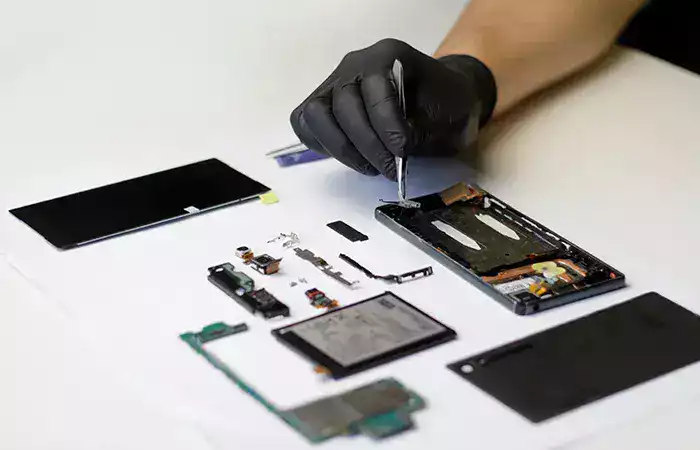
You pick it up a hundred times a day. You tap the screen, and instantly, a video plays, a message sends, or a voice from across the world fills your ear. It feels like magic. But behind that smooth glass surface is a frantic symphony of engineering—a machine more complex than the computers that sent astronauts to the moon.
Understanding how smartphones actually work behind the scenes isn’t just trivia for tech enthusiasts. It helps you appreciate the device you rely on, troubleshoot issues smarter, and make better buying decisions. Let’s pull back the curtain and explore the hidden hardware, the layered software stack, and the invisible radio waves that make your smartphone the most sophisticated tool in human history.
The Silicon Brain: Processor and Memory
At the heart of your phone lies a tiny chip called the System-on-a-Chip, or SoC. Unlike a desktop computer with separate components, the SoC packs the processor, graphics, memory controller, and modem into a single square of silicon smaller than a postage stamp.
The Application Processor
The main processor, or CPU, handles general tasks like opening apps and rendering web pages — the same core parts our guide on how computers work explains, shrunk to fit your pocket. Modern smartphone CPUs use a design called ARM architecture, which prioritizes energy efficiency. You’ll see configurations like an eight-core Exynos 8 Octa with four high-performance cores for demanding tasks and four energy-efficient cores for (source). The graphics processor, or GPU, sits alongside, rendering everything from your Instagram feed to 3D games.
Memory Stacking Magic
Space inside a phone is impossibly tight. Engineers solved this by literally stacking chips on top of each other, a technique called package-on-package, or PoP. The RAM sits directly on top of the processor, saving precious board space and allowing data to travel shorter distances at lightning speed. Your photos, apps, and files live on flash storage—fast, silent, and resistant to shocks because there are no moving parts.
The Software Stack: From Metal to App
Hardware without software is just a paperweight. Your smartphone runs a multi-layered software stack that abstracts complexity away from the user and app developers.
The Linux Foundation
At the very bottom sits a modified Linux kernel. This is the bridge between physical hardware and everything else. It manages memory, schedules processing tasks, and handles low-level security permissions. Why Linux? It’s open-source, battle-tested, and incredibly stable. Android is built directly on top of this kernel, which is why it shares DNA with servers and supercomputers worldwide.
The Hardware Abstraction Layer
Between the kernel and the Android framework sits a clever invention called the Hardware Abstraction Layer, or HAL. This layer exists partly for technical reasons—it standardizes how apps talk to different camera sensors or fingerprint readers—and partly for commercial ones. Linux kernel code must be publicly released under its open-source license, but HAL code operates in user space with a different license. This lets manufacturers like Samsung or Google protect proprietary hardware secrets while still building on open foundations.
System Services and Applications
Above the HAL live system services—long-running background programs that manage telephony, notifications, and power states. Finally, at the top, sit your applications. Every app runs in its own sandboxed environment, isolated from others for security. The Binder interprocess communication service acts as the phone’s internal postal system, letting apps safely request services from each other and the operating system.
The Screen That Reads Your Body
Your touchscreen doesn’t actually detect pressure from your finger. It senses electricity.
That electrical interaction is the key to how modern touchscreens detect exactly where your finger touches the display. Beneath the glass, a network of sensors measures tiny changes in the screen’s electrical field and converts them into coordinates the phone can understand. Our guide to how touchscreens work and sense your fingers explains this process in more detail and shows how your phone turns a simple touch into a digital command.
The Capacitive Revolution
Modern smartphone screens are capacitive touchscreens. The surface is coated with a transparent conductive material, usually indium tin oxide, or ITO. This creates a uniform electrostatic field across the glass. Your body naturally conducts electricity. When your finger touches the screen, it disturbs this field, drawing a tiny current at the contact point. Sensors in the corners measure the current flowing to each electrode, and a controller calculates the exact X and Y coordinates by comparing the ratios of these currents.
Why Gloves Don’t Work
This is also why regular gloves block your touch—fabric insulates and breaks the electrical circuit. Special “touchscreen gloves” have conductive threads woven into the fingertips. Pencils or styluses won’t work either unless they carry a charge. Some phones now integrate both capacitive sensing for finger touches and active digitizer layers for precise stylus input, like the Wacom technology in Samsung’s S-Pen that detects pressure levels for drawing and handwriting.
The Radio Orchestra: How You Connect
Making a call or loading a webpage involves an incredibly complex chain of radio communication that most users never think about.
The Baseband Processor
Your phone actually has two brains. The application processor runs Android or iOS — see our guide on what an operating system does. A separate, dedicated chip called the baseband processor handles all cellular communication. This chip is its own miniature computer, running a real-time operating system dedicated entirely to encoding, decoding, and managing radio signals. It handles the physical layer—modulation, error correction, and signal processing—as well as the complex protocols that manage connections, handoffs between towers, and data encryption.
Digital Meets Analog
The baseband processor works in digital. The real world works in analog. Between them sits the radio frequency, or RF, front end. This collection of power amplifiers, filters, and antenna switches boosts the baseband’s digital signals into powerful radio waves for transmission, or delicately pulls incoming whispers from the air. A modern smartphone supports dozens of frequency bands across 2G, 3G, 4G LTE, 5G, Wi-Fi, Bluetooth, GPS, and NFC. Managing all these without interference requires a staggering array of tiny components, each precisely tuned.
Bluetooth is one of these wireless systems, designed for short-range communication between your phone and nearby devices such as headphones, speakers, keyboards, watches, and cars. Instead of using cellular towers or an internet connection, compatible devices establish a direct radio link and exchange data over short distances. Our guide to how Bluetooth works to connect your devices wirelessly explains how devices discover each other, establish a connection, and communicate using radio signals.
The Power Challenge
Designing a baseband chip is one of the hardest engineering challenges on the planet. It must process gigabits of data in real time, support multiple generations of network technology simultaneously, and switch seamlessly between them—all while consuming as little battery power as possible. The processor uses techniques like dynamic voltage and frequency scaling, constantly adjusting its power draw based on demand. When a 5G signal gets weak, the phone must negotiate a handoff to 4G without dropping your video call, a process involving hundreds of steps completed in milliseconds.
That ability to move between network generations is only one part of what 5G changes inside a modern smartphone. Faster speeds get most of the attention, but lower latency, greater network capacity, and more efficient connections can also affect streaming, cloud services, connected devices, and other everyday experiences. Our guide to what 5G technology really changes in daily life explains where these improvements actually matter — and where the difference may be less noticeable.
The Battery Ballet: Power Management
Your phone’s battery is a dangerous object. Lithium-ion cells store enormous energy in a small space and must be treated with extreme care.
The Power Management IC
A dedicated Power Management Integrated Circuit, or PMIC, acts as the battery’s guardian. When you plug in a charger, the PMIC detects the connection, verifies the charger’s safety, and negotiates how much current to draw. It constantly monitors battery voltage, temperature, and charge level. If anything falls outside safe parameters—overheating, overvoltage, or a short circuit—the PMIC instantly cuts power, sometimes before the main processor even knows there’s a problem.
Converting Volts to Work
The typical Li-ion battery outputs between 2.8 and 4.2 volts, but modern processors run on less than 1 volt. A DC-DC converter steps this voltage down. Engineers stack multiple transistors so each one handles only a fraction of the voltage, preventing burnout in the tiny silicon structures. Advanced designs use hybrid converters that switch between different configurations to maintain high efficiency whether the phone is working hard or idling.
The Sleep Cycle
Phones don’t really sleep like we do. Even with the screen off, the PMIC and baseband processor remain alert. The modem periodically wakes up to check for incoming calls or messages—a feature called discontinuous reception. If no signal is detected, the phone drops into progressively deeper sleep states, each consuming less power but taking slightly longer to wake. This ballet of sleeping and waking, managed hundreds of times per second, is why your phone can last all day on a single charge.
The Sensor Symphony: Awareness Beyond Human
Your phone senses the world more richly than you do. A suite of micro-electromechanical systems, or MEMS, gives it spatial awareness.
Motion and Orientation
Inside your phone sits a six-axis inertial measurement unit combining a three-axis accelerometer and a three-axis gyroscope. The accelerometer detects linear movement and gravity, telling the phone which way is up. The gyroscope measures rotation rate, enabling smooth camera stabilization and immersive augmented reality. A magnetometer acts as a digital compass. Together, these sensors let your phone track its orientation in three-dimensional space with remarkable precision.
Environment and Health
Beyond motion, modern phones pack environmental sensors. A barometric pressure sensor helps GPS lock faster and can measure altitude changes for fitness tracking. Proximity sensors detect when the phone is against your ear during a call, turning off the screen to prevent cheek-dialing. Ambient light sensors adjust screen brightness automatically. Heart rate monitors and even blood oxygen sensors have appeared in various models, using light-based photoplethysmography to detect your pulse through your skin the same sensing that ties your phone into the Internet of Things.
GPS adds another layer of awareness by allowing your smartphone to determine its location using signals transmitted by satellites. The phone compares the timing of signals from multiple satellites to calculate its position, while additional sensors and network data can help improve speed and accuracy in everyday use. Our guide to how GPS works and why it is so accurate explains how satellite positioning works and how your phone can determine where you are with remarkable precision.
Conclusion: A Miracle in Your Pocket
Your smartphone is not a single device. It is dozens of specialized systems working in concert at speeds measured in billionths of a second. The capacitive touchscreen translates your body’s electricity into digital commands. A multi-layered software stack running on a Linux kernel abstracts away terrifying complexity into the smooth interface you swipe every day. Dedicated baseband processors and power management chips handle radio communication and battery safety in the background, tasks so demanding they require their own miniature computers.
The next time you pick up your phone, pause for a second. That slab of glass and metal is a triumph of materials science, electrical engineering, computer science, and industrial design. It contains more processing power than entire rooms of 1960s mainframes. It fits in your pocket. And it connects you, wirelessly and instantly, to nearly every person on the planet.
The magic isn’t that it works. The magic is that it works so reliably that we’ve stopped noticing.