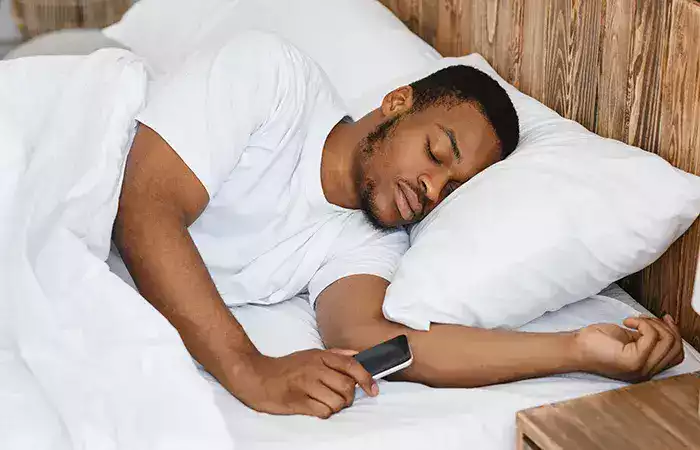
How sleep tracking works is a question many people ask after seeing a smartwatch, fitness band, or smart ring display a detailed chart of their night. The device may report when they fell asleep, how often they woke up, and how much time they spent in light, deep, or REM sleep.
It can seem remarkable that something worn on a wrist or finger knows so much about sleep. But the explanation is less mysterious than it appears: sleep trackers measure physical signals and use software to estimate what happened during the night.
These estimates can be helpful for identifying patterns and improving everyday habits. However, they also have limitations. A sleep score is not a medical diagnosis, and a colorful chart is not the same as a laboratory sleep study.
In this guide, you will learn how sleep trackers collect information, how they estimate sleep stages, which measurements are most useful, and when their results should be treated cautiously. We will also discuss privacy, accuracy, and practical ways to use sleep data without becoming stressed by the numbers.
What Is Sleep Tracking?
Sleep tracking is the process of collecting and analyzing information related to a person’s sleep.
Consumer devices typically estimate when someone falls asleep, when they wake up, how long they sleep, and how their sleep patterns change over time.
Some devices also provide estimated sleep stages, overnight heart rate, breathing rate, skin temperature trends, and other measurements.
The important word is estimate.
Most consumer sleep trackers do not directly measure the brain activity used to identify sleep stages in a clinical sleep study. Instead, they interpret signals such as movement and changes in cardiovascular activity.
Why Do People Track Their Sleep?
People use sleep tracking for several reasons:
- To understand their usual bedtime and wake-up schedule.
- To estimate how much sleep they get each night.
- To notice changes associated with travel, work, or daily habits.
- To compare sleep patterns across several weeks.
- To support conversations with a healthcare professional when sleep problems persist.
Sleep tracking is one example of the broader field of connected health technology. Our guide to what smart health is and how health technology works explains how devices and software collect information to support everyday health awareness.
How Sleep Tracking Works Step by Step
Although different brands use different algorithms, most wearable sleep trackers follow a similar process.
Step 1: Sensors Collect Physical Signals
During the night, sensors measure information such as movement, pulse-related changes, and sometimes temperature or breathing patterns.
These measurements are recorded at intervals determined by the device and its software.
Step 2: Software Processes the Measurements
The device or a connected application filters and organizes the information.
For example, it may identify periods of low movement combined with changes in heart rate that are commonly associated with sleep.
Step 3: An Algorithm Estimates Sleep and Wakefulness
The system uses rules, statistical models, machine learning, or a combination of methods to estimate whether the person was awake or asleep.
Different devices can interpret the same physical signals differently.
Step 4: The Device Estimates Sleep Stages
Some trackers attempt to divide the night into light sleep, deep sleep, and REM sleep.
These classifications are inferred from indirect measurements rather than directly observed brain waves.
Step 5: The App Creates a Sleep Report
The application summarizes the estimated sleep duration, timing, interruptions, stages, and other available measurements.
Many products also calculate a sleep score using a formula chosen by the manufacturer.
Step 6: You Review Patterns Over Time
The most useful step is often comparing several nights rather than reacting to a single score.
Trends may help you notice irregular schedules, short sleep opportunities, or changes associated with everyday routines.
What Sensors Do Sleep Trackers Use?
Modern wearables combine different sensors to estimate sleep. Each sensor measures something specific, and none provides a complete picture by itself.
Accelerometer: Measuring Movement
An accelerometer detects movement and changes in acceleration.
During sleep, many people move less than they do while awake. A tracker can use this pattern to help estimate sleep periods.
However, remaining still does not necessarily mean a person is asleep.
Someone lying quietly in bed while reading or thinking may be classified as sleeping. Likewise, movement during sleep can sometimes be interpreted as wakefulness.
Optical Heart Rate Sensor: Measuring Pulse Signals
Many watches and rings use a technique called photoplethysmography, or PPG.
An optical sensor shines light into the skin and detects changes in reflected or transmitted light associated with blood volume changes.
Software uses those signals to estimate pulse rate and, in some devices, pulse-related variability.
Heart rate patterns can provide additional clues about sleep, but they do not identify sleep stages with certainty.
Temperature Sensors
Some wearables measure skin temperature or changes relative to a personal baseline.
Temperature patterns may be influenced by sleep, room conditions, illness, the menstrual cycle, and other factors.
Skin temperature is not identical to core body temperature, and a change should not automatically be interpreted as a medical problem.
Breathing-Related Measurements
Some devices estimate breathing rate using movement, optical signals, or other sensing technologies.
These measurements can add context to overnight patterns.
However, an estimated breathing rate is not equivalent to a comprehensive clinical assessment of respiratory function.
Blood Oxygen Sensors
Certain wearables include optical sensors intended to estimate peripheral oxygen saturation, commonly displayed as SpO2.
Availability, regulatory status, measurement conditions, and accuracy vary by product and feature.
Consumer oxygen measurements may be affected by factors such as motion, circulation, sensor contact, and other conditions. They should not be used alone to diagnose or rule out sleep apnea or other disorders.
Common Sleep Tracking Sensors Compared
| Sensor | What it measures | How it helps | Important limitation |
|---|---|---|---|
| Accelerometer | Body movement | Estimates rest and activity periods | Stillness does not prove sleep |
| Optical PPG | Pulse-related light changes | Estimates heart rate and related patterns | Motion and sensor fit affect signals |
| Temperature sensor | Skin temperature trends | Adds overnight physiological context | Influenced by environment and other factors |
| Breathing-related sensors | Signals associated with respiration | Estimates breathing patterns | Not a complete respiratory assessment |
| Optical oxygen sensor | Estimated oxygen saturation | May provide additional information | Not sufficient alone for diagnosis |
For more information about these technologies, read how wearable health devices monitor your body.
How Do Smartwatches Know When You Are Asleep?
Smartwatches generally look for combinations of signals that resemble previously observed sleep patterns.
For example, prolonged low movement, changes in pulse rate, and the time of day may all contribute to an estimate.
The device may also use your configured sleep schedule or other contextual information.
But the system does not literally know that you are asleep. It produces an estimate based on measurements and software.
Can a Watch Confuse Resting with Sleeping?
Yes.
Quiet wakefulness is one of the challenges for movement-based sleep estimation.
If you lie still in bed for a long period, the device may count some of that time as sleep.
This is one reason that total sleep time reported by a wearable may differ from your own experience.
Can Movement During Sleep Cause Errors?
Yes. Some people move frequently while sleeping.
Depending on the device and algorithm, these movements may affect estimates of awakenings or sleep continuity.
Fit, wearing position, and signal quality can also influence the result.
What Are the Different Stages of Sleep?
Sleep is not a single, uniform state.
In clinical sleep medicine, sleep is classified using physiological measurements, including brain activity, eye movements, and muscle activity.
The main categories are non-rapid eye movement sleep, known as NREM, and rapid eye movement sleep, known as REM.
N1: Transition into Sleep
N1 is a relatively light stage associated with the transition from wakefulness into sleep.
It is generally easier to wake someone during this stage than during deeper sleep.
N2: Established Non-REM Sleep
N2 is another non-REM stage and commonly represents a substantial portion of adult sleep.
It has distinctive brain activity patterns that are identifiable during a clinical sleep study.
N3: Deep Sleep
N3 is often called deep sleep or slow-wave sleep.
It is characterized by particular patterns of slow brain-wave activity.
Deep sleep contributes to normal sleep physiology, but a consumer device’s estimated number of deep-sleep minutes should not be treated as an exact measurement.
REM Sleep
REM sleep involves characteristic brain activity, rapid eye movements, and changes in muscle activity.
Dreaming can occur in several sleep stages, although vivid dreaming is commonly associated with REM sleep.
Sleep cycles vary across the night, and the distribution of stages can change with age and other factors.
Clinical Sleep Stages Compared
| Stage | General characteristics | What a wearable can do |
|---|---|---|
| N1 | Transition between wakefulness and sleep | Usually not identified separately with clinical precision |
| N2 | Established non-REM sleep | May be grouped into a broader light-sleep estimate |
| N3 | Slow-wave or deep sleep | May estimate deep-sleep periods indirectly |
| REM | Distinctive brain, eye, and muscle activity | May estimate REM using indirect patterns |
How Accurate Are Sleep Trackers?
Sleep tracker accuracy depends on the device, software version, population, measurement, and conditions under which it is tested.
There is no single accuracy percentage that applies to every smartwatch, ring, phone application, and sleep metric.
Sleep Duration Estimates
Many consumer devices can provide useful estimates of general sleep timing and duration.
However, they may overestimate sleep when someone lies still while awake or misclassify periods of movement.
Accuracy varies across products and individuals.
Sleep Stage Estimates
Distinguishing light, deep, and REM sleep is generally more challenging than estimating whether someone is asleep or awake.
Clinical sleep stages are identified using physiological signals that most consumer wearables do not directly measure.
Two devices may therefore report different stage distributions for the same night.
Sleep Scores
A sleep score is a manufacturer-designed summary, not a universal medical measurement.
One company may emphasize duration and consistency, while another may use different weightings or additional signals.
A score of 85 from one brand cannot automatically be compared with a score of 85 from another.
Why Independent Validation Matters
When evaluating a sleep tracker, look for studies comparing its measurements with appropriate reference methods.
Pay attention to which metric was tested, who participated, and whether the study evaluated the specific device and software version.
A study demonstrating reasonable performance for sleep duration does not necessarily establish equivalent accuracy for REM sleep or deep sleep.
What Is Polysomnography and Why Is It Different?
Polysomnography is a comprehensive sleep study used in clinical settings to evaluate sleep and certain sleep-related conditions.
Depending on the study, it can record brain activity, eye movements, muscle activity, breathing, oxygen levels, heart-related signals, and other measurements.
These signals allow trained professionals to evaluate sleep stages and investigate specific sleep disorders.
A wrist-based consumer tracker generally does not collect the same information.
Sleep Tracker vs. Clinical Sleep Study
| Feature | Consumer sleep tracker | Clinical polysomnography |
|---|---|---|
| Primary purpose | Everyday sleep awareness | Clinical evaluation of sleep |
| Typical measurements | Movement, pulse-related signals, selected other sensors | Brain, eye, muscle, breathing, and other physiological signals |
| Sleep stages | Estimated indirectly | Scored from clinical recordings |
| Typical setting | Home and everyday life | Sleep laboratory or appropriate clinical setting |
| Medical diagnosis | Depends on the specific regulated feature; general scores are not diagnostic | Supports clinical diagnosis and evaluation |
| Long-term convenience | Often suitable for repeated nightly tracking | Usually arranged for a specific clinical purpose |
The National Heart, Lung, and Blood Institute explains sleep studies and how they help healthcare professionals investigate sleep-related conditions.
Can Sleep Trackers Detect Sleep Apnea?
Sleep apnea is a condition involving repeated breathing disturbances during sleep.
Some consumer products offer features intended to identify patterns that may be associated with breathing disturbances or possible sleep apnea.
However, the capabilities and regulatory status of these features vary by device, country, and software version.
A feature that provides a notification of possible breathing disturbances is not necessarily equivalent to a diagnostic sleep study.
Even a device with an authorized screening or notification feature may have limitations, including missed cases and false alerts.
What If My Tracker Reports an Abnormal Pattern?
Review the feature’s instructions and limitations.
If you have symptoms or repeated concerning results, discuss them with a qualified healthcare professional.
Do not start, stop, or change medical treatment solely because of a consumer sleep-tracking chart.
What If My Tracker Shows Normal Sleep?
A normal-looking score does not rule out a sleep disorder.
Persistent symptoms deserve attention even when the app reports excellent sleep.
What Sleep Measurements Are Most Useful?
For many people, basic patterns are easier to interpret than detailed sleep-stage charts.
Total Sleep Time
This is the estimated amount of time spent asleep.
It can help identify whether your usual sleep duration appears short or changes significantly from week to week.
Bedtime and Wake-Up Time
These measurements show when your sleep period begins and ends.
They can help reveal irregular schedules, especially when comparing weekdays and weekends.
Sleep Consistency
Consistency describes how regularly you go to bed and wake up.
A tracker may make schedule changes easier to recognize, although the importance of any pattern depends on your circumstances.
Estimated Awakenings
Some devices report how often you woke up or appeared restless.
Brief awakenings are a normal part of sleep, and trackers may not detect every one accurately.
Sleep Efficiency
Sleep efficiency is commonly calculated as time asleep divided by time in bed, expressed as a percentage.
For example, if a person spends eight hours in bed and sleeps an estimated seven hours, the calculated sleep efficiency is 87.5%.
However, the accuracy of the result depends on the accuracy of both time measurements.
Overnight Heart Rate
Heart rate trends can provide additional context, but they are affected by many factors, including activity, illness, medication, stress, and individual physiology.
Changes should be interpreted carefully rather than assigned a single cause.
How Much Sleep Do Adults Need?
Sleep needs vary by age and individual circumstances.
For most adults, public health recommendations generally emphasize getting at least seven hours of sleep regularly, while older adults may have age-specific recommended ranges.
Sleep quality, continuity, and how a person feels during the day also matter.
A wearable can estimate duration, but it cannot independently determine whether you have received all the restorative sleep your body needs.
The Centers for Disease Control and Prevention provides information about sleep and health, including recommendations for different age groups.
How to Use Sleep Tracking to Improve Everyday Habits
The most practical value of a sleep tracker often comes from observing patterns and making reasonable changes.
1. Establish a Baseline
Begin by reviewing several nights or weeks of data.
Look for broad patterns rather than assuming that one unusual night represents a lasting problem.
2. Pay Attention to Your Schedule
Compare bedtime and wake-up times.
If your schedule changes substantially from one day to another, consider whether a more consistent routine is realistic for you.
3. Change One Habit at a Time
You might experiment with reducing late caffeine, improving bedroom comfort, or creating a calmer bedtime routine.
Changing several things simultaneously makes it harder to identify which change may have helped.
4. Compare Trends, Not Individual Scores
Look for sustained changes over time.
A single poor sleep score may reflect measurement error, an unusual night, or a temporary disruption.
5. Consider How You Feel
Technology should not replace your own observations.
If you feel well rested but receive a disappointing score, the result may not tell the full story.
If you remain exhausted despite excellent scores, do not dismiss your symptoms.
6. Seek Professional Advice for Persistent Problems
Long-lasting difficulty sleeping, significant daytime sleepiness, or possible breathing disturbances during sleep deserve professional evaluation.
For broader health monitoring, see how health apps help track chronic conditions.
Can Sleep Tracking Make Sleep Anxiety Worse?
Yes, for some people.
Repeatedly checking sleep scores can create pressure to achieve a perfect result.
Some people become preoccupied with optimizing sleep measurements, a pattern sometimes described as orthosomnia.
The term is used to describe concerns about excessive focus on tracker-generated sleep data; it is not a reason to assume that every enthusiastic tracker user has a medical condition.
Signs You May Be Focusing Too Much on Sleep Scores
- You feel anxious before checking your morning score.
- You repeatedly review small changes in sleep stages.
- You assume a low score means your day will go badly.
- You ignore how rested you feel because the app disagrees.
- You change routines excessively to improve the device’s numbers.
How to Reduce Sleep-Tracking Stress
Consider checking weekly trends instead of daily scores.
You may also hide detailed stage charts, disable notifications, or take a break from tracking.
If worry about sleep becomes persistent or disruptive, a healthcare professional can help evaluate the situation.
What Are the Privacy Risks of Sleep Tracking?
Sleep tracking creates information about your routines and potentially sensitive health-related patterns.
Depending on the product, data may be stored on the device, in a connected phone application, or in a cloud service.
Some services may share information with additional providers under their privacy policies.
Review Data Collection
Check which measurements the device collects and whether all features are necessary for your intended use.
Understand Cloud Storage
Find out whether sleep data is uploaded to company servers and what account is required to access it.
Check Sharing Settings
Review permissions for connected health apps, third-party integrations, and optional data sharing.
Protect Your Account
Use a strong, unique password and enable multifactor authentication when supported.
Review Retention and Deletion Options
Look for information about how long data is retained and whether you can export or delete it.
Privacy protections and legal requirements vary by provider and jurisdiction.
Smartwatch vs. Smart Ring vs. Phone App: Which Is Better?
The best device depends on your comfort, budget, desired measurements, and the quality of the particular product.
Smartwatches
Smartwatches can combine sleep tracking with activity monitoring, notifications, and other functions.
However, some people find a watch uncomfortable to wear overnight, and battery life varies.
Smart Rings
Smart rings offer a smaller wearable form factor and may be more comfortable for certain users.
Sensor quality, fit, available features, and subscription requirements vary by manufacturer.
Fitness Bands
Fitness bands may provide basic sleep estimates in a lightweight device.
They can be suitable for people who prefer a simpler interface.
Phone Applications
Phone-only sleep apps may estimate patterns using movement, sound, schedules, or user-entered information.
Without direct body measurements, their capabilities and accuracy differ from those of many wearables.
Contactless Trackers
Some products use sensors placed under a mattress or near a bed.
They can be convenient for people who dislike wearing devices, but accuracy and compatibility depend on the sensing technology and sleeping environment.
Can Artificial Intelligence Improve Sleep Tracking?
Machine learning can help sleep-tracking systems identify patterns in sensor measurements.
For example, a model may be trained using data collected from participants whose sleep was also measured through an appropriate reference method.
During development, the model learns statistical relationships between sensor signals and the reference classifications.
When the product is used at home, it applies those learned relationships to new measurements.
However, using artificial intelligence does not automatically make a tracker medically accurate.
Performance still depends on data quality, model design, independent validation, and the conditions in which the device is used.
Our article on how AI health tools assist early risk detection safely explores similar principles in other health technologies.
When Should You Talk to a Healthcare Professional?
Sleep trackers can support awareness, but persistent symptoms should not be evaluated through an app alone.
Consider seeking professional advice if you experience:
- Persistent difficulty falling asleep or staying asleep.
- Excessive daytime sleepiness.
- Frequent loud snoring, especially with reported breathing pauses.
- Repeated waking with gasping or choking.
- Sleep problems that interfere with work, daily activities, or safety.
- Ongoing fatigue despite apparently adequate sleep time.
Sudden or severe breathing difficulty requires urgent medical assessment rather than reliance on wearable data.
The National Heart, Lung, and Blood Institute explains sleep deficiency and its potential effects on health and daily functioning.
Frequently Asked Questions About Sleep Tracking
How Does Sleep Tracking Work on a Smartwatch?
A smartwatch collects signals such as movement and pulse-related measurements. Software analyzes those signals to estimate sleep timing, duration, and sometimes sleep stages.
Can a Smartwatch Accurately Measure Deep Sleep?
A smartwatch may estimate deep sleep, but accuracy varies. Most consumer devices do not directly measure the brain-wave patterns used to identify deep sleep clinically.
Can a Sleep Tracker Tell When I Am Dreaming?
No consumer tracker can reliably determine the exact content of a dream. Some devices estimate REM sleep, which is associated with vivid dreaming, but REM estimates are not direct measurements of dreaming.
Why Does My Sleep Tracker Say I Slept While I Was Awake?
Quiet wakefulness can resemble sleep in movement and pulse-related data. The algorithm may therefore misclassify some time spent resting as sleep.
Why Do Two Sleep Trackers Show Different Results?
Different sensors, algorithms, definitions, and data-processing methods can produce different estimates from the same night.
Are Sleep Scores the Same Across Brands?
No. Manufacturers use different scoring systems, so scores are not necessarily comparable.
Can Sleep Tracking Diagnose Insomnia?
A general consumer sleep score cannot diagnose insomnia. Diagnosis requires an appropriate clinical assessment of symptoms and circumstances.
Can a Sleep Tracker Diagnose Sleep Apnea?
General sleep-tracking features cannot independently diagnose sleep apnea. Certain products have specific regulated detection or notification functions, but their intended use and limitations must be reviewed individually.
Is It Safe to Wear a Sleep Tracker Every Night?
Many people wear consumer trackers overnight without problems. Comfort, skin irritation, device instructions, charging practices, and any relevant medical-device precautions should be considered.
Should I Stop Tracking If It Makes Me Anxious?
Reducing how often you review data or taking a break may help if tracking increases worry. Persistent sleep-related anxiety can be discussed with a healthcare professional.
Trusted Sources and Further Reading
For additional background, consult these public health resources:
- National Heart, Lung, and Blood Institute: Sleep Studies — explains clinical sleep testing and the measurements involved.
- Centers for Disease Control and Prevention: About Sleep — provides information about sleep duration and healthy sleep.
- National Heart, Lung, and Blood Institute: Sleep Deprivation and Deficiency — discusses inadequate sleep and its consequences.
Conclusion
Understanding how sleep tracking works helps you use the technology with realistic expectations.
Smartwatches, rings, fitness bands, and other devices collect physical signals and use software to estimate sleep patterns. Movement and pulse-related measurements are particularly common, while some products also monitor temperature, breathing-related signals, or estimated oxygen levels.
These tools can be useful for observing bedtime consistency, estimated sleep duration, and changes across several nights or weeks. However, detailed sleep-stage charts and proprietary sleep scores have important limitations.
Consumer sleep tracking is not the same as clinical polysomnography, and a normal-looking report does not rule out a sleep disorder. The capabilities of specialized medical features must be evaluated according to their specific intended use.
The best approach is to focus on useful trends, protect your personal information, and consider how you actually feel during the day.
If a device helps you recognize habits and make reasonable improvements, it may be a valuable everyday tool. If the numbers create anxiety or conflict with persistent symptoms, step away from the score and seek appropriate professional guidance.
Sleep tracking should help you understand your rest, not make you feel judged by it.