
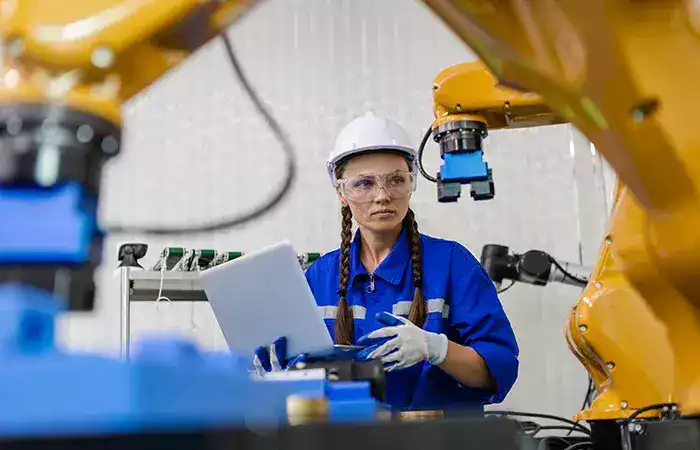
The global workplace is being reshaped at a pace unseen since the Industrial Revolution. From factories in China to call centers in India to law firms in New York, automation is not a future threat—it is a present reality. Robots assemble cars alongside human workers. Software processes invoices without human hands. AI chatbots handle customer inquiries before they ever reach a person. Algorithms screen resumes, schedule interviews, and even make hiring recommendations.
The scale is staggering. According to recent estimates, nearly 40% of all work activities globally could be automated with current technology. But automation is not evenly distributed. Some countries will see dramatic job displacement. Others will see jobs shift and transform. Some workers will struggle to adapt. Others will find new opportunities they could not have imagined a decade ago.
As an SEO and global labor market analyst who has studied automation trends across six continents, I have seen the pattern repeat. Automation does not eliminate the need for human workers. It changes what those workers do — the central question in will AI replace jobs. The factories that replaced hand-weaving with mechanical looms did not eliminate textile jobs—they eliminated weaving. The same pattern is playing out now, but faster and more globally.
This guide explains how automation is changing jobs around the world, country by country, sector by sector, and what it means for workers everywhere.
Part 1: The Global Pattern — What Automation Actually Does to Jobs
Before looking at specific countries, understand the underlying dynamic. Automation does four things to jobs:
Eliminates some tasks: Routine, predictable, repetitive tasks are automated. Data entry. Basic translation. Simple customer service. Invoice processing.
Changes how tasks are done: Remaining tasks are performed differently. A radiologist with AI assistance reads more scans, more accurately, but the job changes from “look at every image” to “review AI flags and make final judgments.”
Creates new tasks: Entirely new work emerges. AI trainers label data for machine learning models. Prompt engineers craft effective queries. Automation workflow designers connect systems. Drone operators inspect infrastructure.
Shifts where work happens: Automation makes remote work easier, offshoring more feasible, and gig work more efficient. A customer service agent in Nairobi can support a client in London. A graphic designer in Manila can work for a startup in Austin.
The net effect on total employment is not zero. Automation increases productivity, which lowers costs, which increases demand, which can increase employment. But this compensatory mechanism takes time and is not automatic.
Part 2: Developed Economies — The Productivity Paradox
In wealthy nations like the United States, Germany, Japan, and South Korea, automation is driven by high labor costs and aging workforces.
United States
The US has some of the highest labor costs in the world, making automation financially attractive. Manufacturing employment has been declining for decades, but the cause is primarily automation, not trade. US factories produce more than ever with far fewer workers.
The current wave is hitting white-collar work. Legal research, accounting, medical transcription, and customer service are all being automated. A junior associate at a law firm who used to spend hours reviewing documents for discovery now competes with AI that does the same work in minutes.
However, new jobs are emerging. The US has seen growth in AI-related roles: prompt engineers, AI trainers, automation specialists, and data labelers. The challenge is that these new roles require different skills than the jobs being eliminated. A call center agent whose job is automated cannot become a prompt engineer without significant retraining.
The US also benefits from being the headquarters of most major AI companies. Silicon Valley, Seattle, and Boston are creating high-value AI jobs even as AI eliminates lower-value routine work elsewhere.
What is changing: The middle is hollowing out. Both high-skill and low-skill jobs are growing, but mid-skill routine jobs (bookkeeping, data entry, administrative support) are shrinking.
Germany and Western Europe
Germany’s manufacturing sector is highly automated, with some of the highest robot densities in the world. German automakers have integrated robots alongside human workers for decades. The result is not mass unemployment but transformed jobs. Workers who used to perform repetitive assembly tasks now supervise robots, perform quality control, and handle exception cases.
Western Europe’s strong social safety nets and worker protections have made the transition less painful than in the US. Germany’s apprenticeship system continuously retools workers for changing job requirements. However, Europe lags the US and China in AI development, raising concerns about long-term competitiveness.
Japan and South Korea
Japan and South Korea have aging populations and shrinking workforces. Automation is seen as a necessity, not a threat. Japanese companies lead in robotics for manufacturing, elder care, and hospitality. South Korea has the highest robot density in the world.
In both countries, automation is filling labor gaps rather than displacing workers. There are simply not enough young people to do all the work. Automation allows the economy to function with fewer workers.
Part 3: Emerging Economies — The Leapfrog Opportunity
For developing nations, automation presents both risk and opportunity. The risk is that automation eliminates the routine jobs that have historically been the first rung on the economic ladder. The opportunity is leapfrogging—skipping entire stages of development that richer nations had to go through.
China
China is both the world’s factory and an emerging AI superpower. The Chinese government has made automation a national priority. Factories that once employed tens of thousands of workers now employ thousands alongside thousands of robots.
The impact on jobs is complex. Automation eliminates low-skill manufacturing jobs that have lifted millions out of poverty. But China is also developing its own AI industry, creating high-skill jobs. The government is investing heavily in retraining programs, but the scale of displacement is immense.
China’s demographics compound the challenge. The working-age population is shrinking. Automation is partly a response to labor scarcity, not just a cause of unemployment.
India
India faces a different challenge. Much of India’s economic growth has come from services, not manufacturing. Call centers, IT support, and business process outsourcing provided millions of jobs for English-speaking workers.
These jobs are now being automated. AI chatbots handle routine customer inquiries. Software automates IT support tickets. Translation AI threatens language services. The jobs that created India’s middle class are under direct threat.
However, India has a massive pool of skilled engineers and a thriving startup ecosystem. Indian workers are increasingly moving up the value chain—from routine IT support to AI development, from basic call center work to complex customer experience management. The transition is painful but possible.
Vietnam and Southeast Asia
Southeast Asian nations are at an earlier stage of development. They have benefited from manufacturing shifting out of China due to trade tensions and rising Chinese labor costs. Vietnam, Thailand, and Indonesia are building factories that are more automated than the factories they replaced.
This creates a challenge. The first generation of factory jobs in East Asia were low-skill assembly jobs that required minimal education. Vietnam’s new factories require more skilled workers who can operate and maintain automated equipment. The educational system must adapt quickly.
Part 4: Developing Economies — The Dual Challenge
The poorest nations face the most difficult challenge. They have the least capacity to invest in automation, yet they are most vulnerable to its disruptive effects.
Sub-Saharan Africa
Most of sub-Saharan Africa has very low rates of automation adoption. Robotics and AI require infrastructure (reliable electricity, internet connectivity) that is often lacking. Most jobs are in agriculture and informal services, not manufacturing or formal services.
The risk is not immediate automation of existing jobs — and understanding how automation works makes the stakes clearer. The risk is that automation makes it harder for African nations to follow the development path that worked for East Asia. South Korea and China grew by moving workers from farms to factories, then from factories to services. If the factory jobs are automated, that path may be closed.
There are also opportunities. Mobile money (M-Pesa in Kenya) leapfrogged traditional banking. AI could enable leapfrogging in education (AI tutors), healthcare (AI diagnostics), and agriculture (AI crop advice). But this requires investment and enabling policy.
Latin America
Latin America has a more mixed picture. Mexico has benefited from nearshoring—US companies moving manufacturing closer to home to avoid supply chain disruptions. Those factories are increasingly automated, requiring more skilled workers than previous generations.
Brazil has a large services sector vulnerable to automation. Call centers, data processing, and basic IT services are all at risk. Argentina has a strong technology sector but struggles with economic instability.
Part 5: Global Trends Affecting All Countries
Some trends are truly global, affecting every country regardless of development level.
Remote Work and Global Competition
Automation plus remote work means workers in high-cost countries compete with workers in low-cost countries AND with AI. A graphic designer in San Francisco competes with a designer in Nairobi and with Canva’s AI. This puts downward pressure on wages for routine digital work.
The Skills Gap Widens
The gap between high-skill and low-skill workers is widening globally. Workers who can leverage AI as a tool become more productive and earn more. Workers whose jobs can be fully automated struggle. The middle is disappearing.
Gig Work and Precarity
Automation enables platforms (Uber, Upwork, Fiverr, Amazon Mechanical Turk) that disaggregate work into micro-tasks. Workers in developing countries can compete for these tasks, but without employment protections, benefits, or job security. The growth of gig work is global.
Reskilling as a Policy Priority
Every country, from the US to Vietnam, is investing in reskilling. The question is whether reskilling can keep pace with automation. Current evidence suggests it is not. Displaced workers often cannot afford the time or money to retrain. Those who do retrain may find that the new skills are also being automated.
Part 6: What the Research Shows
Recent studies provide quantitative evidence of automation’s impact:
Job creation vs. job destruction: Research suggests that while automation eliminates some jobs, it also creates new ones. A study across 28 countries found that occupations with higher automation exposure also had higher job growth. The net effect was not negative. But this aggregated data hides significant local variation. A factory town that loses its major employer is devastated even if jobs are growing elsewhere.
Wage polarization: Automation contributes to wage polarization. High-skill workers benefit. Low-skill workers see stagnant wages. Mid-skill routine workers see the largest negative impacts.
Geographic inequality: Automation impacts are highly concentrated. A few cities (San Francisco, Seattle, Boston, Bangalore, Shenzhen) capture most of the benefits. Rural areas and smaller industrial cities bear most of the costs.
Part 7: What Workers Can Do
Regardless of where you live, you can take steps to adapt:
Focus on uniquely human skills: Creativity, complex problem-solving, emotional intelligence, negotiation, and relationship-building are the least automatable tasks. Develop these.
Learn to work with AI: Do not ignore the tools. Learn to use AI assistants, automation platforms, and data analysis tools. The most valuable workers are those who can leverage AI to amplify their capabilities.
Stay adaptable: The half-life of skills is shrinking. Continuous learning is not optional. Set aside time regularly to learn new tools and techniques.
Build a portfolio, not a resume: Demonstrate what you can do. Create projects. Share your work. A portfolio of evidence matters more than a list of past jobs.
Conclusion
Automation is changing jobs around the world, but not in a single, uniform direction. In developed economies with high labor costs, automation replaces routine work across manufacturing and services. The middle is hollowing out. Workers need higher skills to earn the same wages.
In emerging economies like China and Vietnam, automation enables leapfrogging—skipping stages of development—but also eliminates the low-skill factory jobs that historically lifted millions out of poverty. These nations must invest in education and retraining to move workers up the value chain.
In developing economies like sub-Saharan Africa, automation is less immediate but more threatening. It may close the traditional development path even as it offers new opportunities through leapfrogging in services.
The global pattern is clear. Automation eliminates routine tasks, changes how remaining tasks are done, creates new tasks, and shifts where work happens. It does not eliminate the need for human workers, but it changes what those workers do and the skills they need.
The challenge is not technology. It is adaptation. Countries that invest in education, retraining, and social safety nets will navigate the transition more successfully. Countries that ignore the challenge will see rising inequality, social unrest, and lost economic potential.
For individual workers, the message is not hopeless. Focus on uniquely human skills. Learn to work with AI — our understanding AI guide is a good first step. Stay adaptable. Build a portfolio, not a resume. The jobs are changing. But so are the opportunities. The workers who thrive will be those who see automation not as a threat to their job, but as a tool to change their work. The future is not written. It is being built, one automated task at a time.