


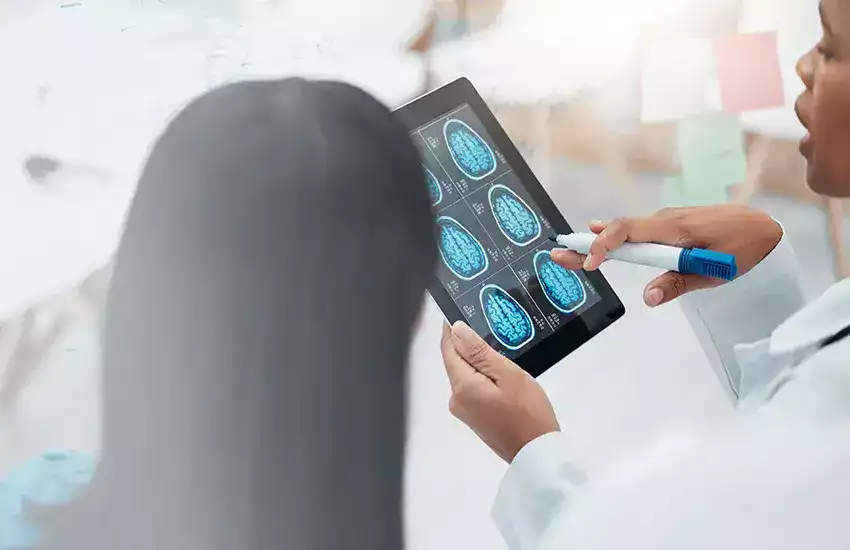
Artificial intelligence is no longer limited to finance, automation, or marketing. It is increasingly being integrated into healthcare systems, wearable devices, mobile apps, and diagnostic platforms.
One of the most promising applications of AI in healthcare is early risk detection.
Instead of reacting to symptoms after they become severe, AI tools can analyze patterns, detect anomalies, and identify potential health risks earlier than traditional methods in some cases.
But how do AI health tools actually work?
Are they reliable?
Can they replace doctors?
Understanding their capabilities — and limitations — is essential for responsible use.
In this in-depth guide, you will learn:
What AI health tools are
How they detect early risk patterns
Where they are currently used
Their benefits and limitations
Ethical and privacy considerations
How to use them safely
Let’s explore this clearly and responsibly.
What Are AI Health Tools?
AI health tools are software systems that use machine learning algorithms to analyze health-related data and identify patterns associated with potential medical risks.
They may be integrated into:
Wearable devices
Smartphone health apps
Hospital diagnostic systems
Imaging platforms
Remote monitoring tools
These systems process large amounts of data faster than humans can.
However, they do not replace clinical judgment.
How AI Detects Health Risks
AI systems operate through pattern recognition.
Here’s how the process typically works:
Data Collection
AI gathers large datasets from medical records, imaging scans, wearable devices, or lab results.Model Training
Algorithms are trained using historical data to recognize patterns linked to specific conditions.Pattern Analysis
When new patient data is entered, the system compares it to known patterns.Risk Prediction
The tool calculates probabilities of potential health issues.
These predictions are statistical, not definitive diagnoses.
Example: Heart Rhythm Monitoring
Some wearable devices use AI to analyze heart rhythm data.
If irregular patterns resembling atrial fibrillation are detected, the system may alert the user.
This can encourage earlier medical consultation.
However:
False positives are possible.
Not all irregularities indicate disease.
Clinical confirmation is always required.
AI in Medical Imaging
AI is increasingly used in analyzing:
X-rays
CT scans
MRIs
Mammograms
Machine learning models can identify subtle abnormalities that might be difficult to detect visually.
For example, AI systems may assist in early detection of:
Lung nodules
Breast cancer markers
Retinal changes
Brain abnormalities
AI acts as a support tool for radiologists.
It does not replace them.
Predictive Risk Scoring
Hospitals use AI to calculate risk scores based on:
Vital signs
Lab results
Patient history
Demographics
These systems may predict:
Risk of hospital readmission
Likelihood of complications
Potential deterioration
Early alerts allow medical teams to intervene sooner.
Chronic Disease Monitoring
AI tools help monitor chronic conditions such as:
Diabetes
Hypertension
Heart disease
By analyzing trends over time, AI may identify patterns such as:
Gradual blood pressure increases
Irregular glucose fluctuations
Worsening activity levels
This supports proactive care adjustments.
However, patient-provider communication remains essential.
AI in Mental Health Screening
Some AI-based apps analyze:
Speech patterns
Text inputs
Behavioral data
to detect early signs of anxiety or depression.
These systems identify language shifts or behavioral markers associated with mood disorders.
They can prompt users to seek professional help.
But they cannot diagnose mental illness independently.
Benefits of AI Early Risk Detection
1. Faster Pattern Recognition
AI can process vast data quickly.
2. Continuous Monitoring
Wearables provide ongoing data rather than isolated snapshots.
3. Early Alerts
Risk detection may occur before severe symptoms develop.
4. Improved Resource Allocation
Hospitals can prioritize high-risk patients more efficiently.
Limitations and Risks
AI health tools have limitations.
1. False Positives
The system may flag risks that are not clinically significant.
2. False Negatives
AI may miss certain conditions.
No system is perfect.
3. Data Bias
If training data lacks diversity, predictions may be less accurate for certain populations.
4. Over-Reliance
Users may mistakenly treat AI alerts as diagnoses.
Professional evaluation is always required.
Privacy and Data Security
AI health tools rely on sensitive medical data.
Users should:
Review privacy policies
Understand data storage practices
Use secure passwords
Enable two-factor authentication
Healthcare institutions must comply with regulatory standards.
Data protection is critical.
Ethical Considerations
AI in healthcare raises ethical questions.
Important considerations include:
Transparency of algorithms
Accountability for errors
Fair access across populations
Informed consent
Responsible development ensures safety and equity.
Can AI Replace Doctors?
No.
AI tools:
Analyze data
Detect patterns
Provide risk probabilities
Doctors:
Interpret context
Perform physical exams
Make clinical judgments
Provide personalized care
AI enhances human expertise — it does not replace it.
Responsible Use Guidelines
To use AI health tools safely:
Treat alerts as informational
Seek professional confirmation
Avoid self-diagnosis
Monitor long-term trends
Maintain regular medical checkups
Technology supports health decisions but does not substitute medical care.
The Role of Preventive Healthcare
AI risk detection aligns with preventive medicine.
Instead of treating advanced disease, healthcare shifts toward:
Early identification
Lifestyle adjustments
Timely interventions
Prevention improves long-term outcomes.
The Future of AI in Healthcare
Emerging developments include:
Personalized treatment algorithms
Real-time biometric monitoring
Advanced genomic analysis
Predictive outbreak modeling
AI-assisted drug discovery
Healthcare innovation continues evolving.
However, regulation and oversight remain essential.
Balancing Innovation With Caution
While AI tools show promise, users should avoid overconfidence.
Smart health literacy means understanding:
What AI can detect
What it cannot detect
When to seek professional care
Balanced expectations protect patient safety.
Why Understanding AI Health Tools Matters
As digital health tools expand, informed users make better decisions.
Understanding AI risk detection prevents:
Panic over minor alerts
Blind reliance on algorithms
Misinterpretation of probabilities
Awareness strengthens safe usage.
Final Thoughts
AI health tools assist early risk detection by analyzing patterns in health data and identifying statistical probabilities of potential conditions.
They can support:
Heart rhythm monitoring
Chronic disease management
Imaging analysis
Hospital risk scoring
Preventive healthcare strategies
However, they are advisory systems.
They do not diagnose, prescribe, or replace medical professionals.
When used responsibly, AI health tools:
Enhance awareness
Support early intervention
Improve healthcare efficiency
But safety always requires:
Professional oversight
Data protection
Informed interpretation
Technology can strengthen healthcare — but human expertise remains at its core.



0 Comments