
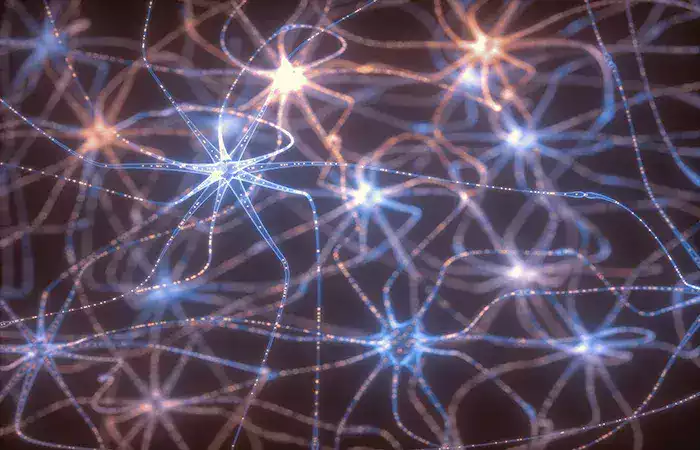
Neural networks are the engine behind the most impressive artificial intelligence of our time. The system that recognizes your face to unlock your phone, the one that understands your voice, the one that powers ChatGPT — all of them run on neural networks. The term shows up constantly in any discussion of AI, usually followed by a vague comparison to the human brain that leaves you no wiser.
Let us fix that. A neural network is not as mysterious as it sounds, and you do not need any mathematics to understand the idea. This guide explains, in plain English, what a neural network actually is, how it is built, how it learns, and what “deep learning” really means. It builds on our guide to how artificial intelligence works — a neural network is the structure that makes most modern AI possible.
What is a neural network?
A neural network is a computer system loosely inspired by the way the human brain is organized. Just as the brain is made of billions of connected cells called neurons that pass signals to one another, a neural network is made of many simple units — also called neurons — connected together and passing numbers between them.
The word “loosely” matters. A neural network is not a digital brain, and its neurons are nothing like real biological ones. The resemblance is a helpful metaphor, not a literal copy. What a neural network really is, underneath, is a mathematical structure: a large web of simple units that work together to recognize patterns in data. Its power comes not from any single unit — each does almost nothing on its own — but from how thousands or millions of them combine.
The structure: layers of neurons
A neural network is organized into layers, and picturing those layers is the key to understanding the whole thing.
There are three kinds. The input layer receives the raw data — the pixels of an image, the words of a sentence, the numbers describing a situation. The output layer produces the final answer — “this is a cat,” “this word comes next,” “approve this transaction.” And in between sit one or more hidden layers, where the actual work happens. Information enters at the input, flows through the hidden layers, and emerges as a result at the output.
Each neuron in a layer is connected to neurons in the next layer, and every one of those connections carries a weight — a number that says how strongly the signal should be passed along. These weights are the heart of the entire system. A neuron takes the numbers coming into it, combines them according to their weights, and passes a result forward to the next layer. Multiply that simple action across a whole network of connected neurons, and patterns emerge that no single neuron could ever capture.
A simple way to picture what a single neuron does is a weighted vote. Imagine a decision that depends on several factors, where some factors matter far more than others. A neuron gathers its incoming signals, multiplies each by its weight — its importance — adds them up, and decides how strong a signal to send onward. A high weight means “pay close attention to this input”; a low or negative weight means “ignore it” or “count it against.” Learning, then, is really the network figuring out how much weight each factor deserves. Once you see a neuron as a tiny weighted vote, a whole network becomes millions of these votes cascading toward a final decision.
How information flows through the network
To see it in action, imagine a network built to recognize whether a photo contains a cat.
The image enters the input layer as raw pixel values. Those values flow into the first hidden layer, where each neuron combines its inputs and passes a signal onward. The next hidden layer combines those signals in turn, and so on through the network, each layer building on the one before. Finally, the output layer produces a result — a number representing how confident the network is that the photo shows a cat.
The crucial idea is that as data flows through the layers, the network is effectively transforming raw information into meaning, step by step. Nothing dramatic happens at any single neuron; the intelligence lives in the collective flow. Everything the network handles — images, sound, language — first becomes data in the form of numbers, and the network’s whole job is to turn those numbers into a useful answer.
How a neural network learns
A freshly built neural network knows nothing. Its weights start as random numbers, so its first guesses are pure nonsense. The magic is in how it improves, through a process called training — the same learning-from-examples principle behind all machine learning.
Training works like a cycle repeated an enormous number of times. The network is shown an example — say, a photo labelled “cat.” It makes a prediction. That prediction is compared to the correct answer, and the size of the mistake is measured. Then the network adjusts its weights very slightly, nudging every connection in the direction that would have made the answer a little less wrong. Show it another example, and it adjusts again. Repeat this across millions of examples, and those millions of tiny adjustments gradually shape the weights until the network reliably gets things right.
This is the single most important thing to understand: a neural network learns by adjusting its weights. All of its “knowledge” is stored in those numbers. When people say a model has billions of parameters, they mean it has billions of these weights — billions of tiny dials, tuned by training, that together determine how the network responds. Learning is nothing more, and nothing less, than finding good values for all those dials.
What “deep learning” really means
You have probably heard the term “deep learning” alongside neural networks, and now it is easy to explain. Deep learning simply means using neural networks with many hidden layers — networks that are “deep” in the sense of having many layers stacked between input and output.
Why does depth help? Because each successive layer can build on the patterns found by the previous one, learning progressively more complex ideas. In an image network, the earliest layers might detect simple things like edges and colours. Middle layers combine those into shapes and textures. Later layers combine those into recognizable objects — an eye, an ear, a whole face. No one programs these stages; the network discovers them on its own during training. This ability to build understanding in layers, from simple features to complex ones, is exactly what makes deep neural networks so powerful, and it is why “deep learning” became the driving force behind the modern AI boom.
It is worth knowing that neural networks are not a new idea — the core concept has existed for decades. What changed recently is that two things finally caught up with the theory: the vast amounts of data needed to train deep networks became available thanks to the internet, and computers became powerful enough to do the enormous number of calculations involved, especially specialized chips built for exactly this kind of work. In other words, the recent explosion in AI is less about a brand-new invention and more about an old idea whose moment finally arrived once the data and computing power existed to make it work.
What neural networks power
Once you know what neural networks do, you start seeing them behind almost every impressive AI feature. They power image recognition — face unlock, photo search, medical scan analysis. They drive speech recognition and the voice assistants that understand you. They handle language translation and, most famously, the large language models behind ChatGPT and similar tools, which are enormous neural networks trained on text. They fuel the recommendation systems that suggest what you watch and buy, and the vision systems that help self-driving cars interpret the road.
The common thread is pattern recognition in complicated, messy data — pictures, sounds, language — where old-style rule-writing simply could not cope. Wherever an AI system seems to “perceive” something, a neural network is almost always doing the perceiving.
The limits worth knowing
For all their power, neural networks have real limitations. They are often a black box: because their knowledge is spread across millions of weights, it can be genuinely hard even for their creators to explain exactly why a network gave a particular answer. They are data-hungry, typically needing large amounts of examples to learn well. They can inherit bias from the data they were trained on, reproducing unfairness that was present in those examples. And crucially, a neural network does not understand anything — it recognizes statistical patterns without comprehension, which is why it can be confidently wrong. Knowing these limits is what separates using the technology wisely from trusting it blindly.
Conclusion
A neural network is a web of simple connected units, loosely inspired by the brain, that learns to recognize patterns in data. Organized into layers — an input, one or more hidden layers, and an output — it passes numbers from one layer to the next, with each connection carrying a weight that shapes the signal. No single neuron is clever, but together, tuned correctly, they can recognize a face, understand a sentence, or drive a car.
The intelligence lives entirely in the weights, and the network finds good values for them through training: making a guess, measuring the error, and nudging every weight a fraction in the right direction, over and over across millions of examples. Stack many layers and you get deep learning, where the network builds understanding step by step — edges into shapes, shapes into objects — discovering those stages on its own. That layered pattern-finding is what powers image recognition, voice assistants, translation, recommendations, and the large language models transforming how we work.
Understood plainly, a neural network is not a digital brain or a mysterious force. It is mathematics and pattern recognition at a scale that produces genuinely remarkable results — powerful and useful, but not conscious, not infallible, and not truly understanding. Knowing how it really works, from the weights up, is what lets you appreciate what modern artificial intelligence can do while keeping a clear head about what it cannot.