


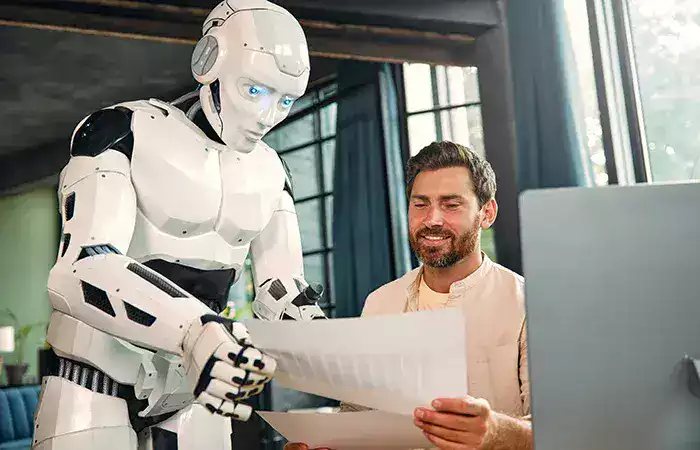
Artificial Intelligence is no longer a distant concept—it is actively transforming the way we work and live every day. From simplifying daily routines to reshaping entire industries, AI is becoming one of the most powerful forces in modern life.
Many people think of AI as something complex or reserved for experts, but the reality is different. AI is already integrated into tools, apps, and systems that you use regularly, often without even realizing it.
Understanding how AI is changing your world is not just interesting—it is essential. It helps you adapt, stay relevant, and take advantage of new opportunities.
In this article, you will discover how AI is reshaping work, improving daily life, and what it means for your future.
What Is AI and Why It Matters Today
Artificial Intelligence refers to systems or software that can perform tasks that typically require human intelligence.
These include:
Learning from data
Understanding language
Recognizing patterns
Making decisions
AI matters today because it allows tasks to be completed faster, more efficiently, and often with greater accuracy than before.
But more importantly, AI is not just improving processes—it is changing how we think about work, productivity, and daily living.
How AI Is Changing the Way We Work
AI is transforming the workplace in powerful and practical ways.
1. Automating Repetitive Tasks
One of the biggest impacts of AI is automation.
Tasks that used to take hours can now be completed in seconds.
Examples include:
Data entry
Email sorting
Report generation
Scheduling
👉 Result: Workers can focus on more meaningful tasks instead of repetitive work.
2. Increasing Productivity
AI tools help people work faster and smarter.
For example:
Writing assistants generate content quickly
AI tools summarize information
Smart systems organize workflows
👉 Result: More output in less time.
3. Supporting Decision Making
AI can analyze large amounts of data and provide insights.
Examples:
Business trends
Customer behavior
Financial predictions
👉 Result: Better and faster decisions.
4. Changing Job Roles
AI is not just changing tasks—it is changing roles.
Some jobs are evolving, while new ones are emerging.
Examples of new roles:
AI tool specialists
Data analysts
Automation managers
👉 Result: New opportunities for those willing to learn.
5. Enabling Remote Work
AI-powered tools make remote work easier:
Virtual meetings
Smart collaboration tools
Automated workflows
👉 Result: More flexibility and work-from-home options.
How AI Is Changing Everyday Life
AI is also transforming how we live on a daily basis.
1. Smarter Devices
Devices are becoming more intelligent:
Phones learn your habits
Apps adapt to your preferences
Systems respond to your needs
👉 Result: More personalized experiences.
2. Better Time Management
AI helps organize your day:
Smart reminders
Automated schedules
Task prioritization
👉 Result: Less stress and better control of time.
3. Improved Healthcare
AI is making healthcare more effective:
Early detection of diseases
Health monitoring apps
Personalized recommendations
👉 Result: Better health outcomes.
4. Personalized Content
AI recommends what you see:
Videos
Music
Products
Articles
👉 Result: More relevant and engaging content.
5. Safer Digital Experiences
AI helps detect:
Fraud
Spam
Security threats
👉 Result: Increased online safety.
Benefits of AI in Work and Life
AI offers significant advantages:
1. Efficiency
Tasks are completed faster and with less effort.
2. Accuracy
AI reduces errors, especially in data processing.
3. Convenience
Daily tasks become easier and more manageable.
4. Accessibility
AI tools are becoming available to everyone, not just experts.
5. Innovation
AI creates new ways of solving problems and improving life.
Challenges and Concerns About AI
While AI offers many benefits, it also raises concerns.
1. Job Displacement
Some repetitive jobs may be replaced by automation.
2. Privacy Issues
AI systems often rely on personal data.
3. Dependence on Technology
Over-reliance on AI may reduce human skills.
4. Ethical Questions
Questions arise about fairness, bias, and responsibility.
Understanding these challenges helps you use AI responsibly.
How You Can Adapt to AI
Adapting to AI does not require advanced knowledge.
1. Learn Basic Digital Skills
Understanding how to use tools is enough to start.
2. Use AI in Small Ways
Examples:
Writing assistance
Task organization
Learning tools
3. Stay Curious
Technology evolves quickly, so staying informed is key.
4. Focus on Human Skills
Skills like creativity, communication, and critical thinking remain valuable.
The Future of AI in Work and Life
AI will continue to evolve and integrate into more aspects of life.
Future possibilities include:
Fully automated systems
More personalized services
Advanced healthcare solutions
Smarter cities and homes
The future will not be about humans versus AI, but humans working with AI.
Conclusion
Artificial Intelligence is already transforming the way we work and live. It is making tasks easier, improving efficiency, and opening new opportunities.
At the same time, it is changing how we approach work, learn new skills, and interact with technology.
Understanding AI is not about becoming an expert—it is about becoming aware. It allows you to use technology intentionally, adapt to changes, and take advantage of what AI offers.
The world is evolving, and AI is at the center of that transformation. By embracing it step by step, you position yourself not just to keep up, but to move forward with confidence.
The key is simple: learn, adapt, and use AI as a tool to improve your life—not replace it.
0 Comments