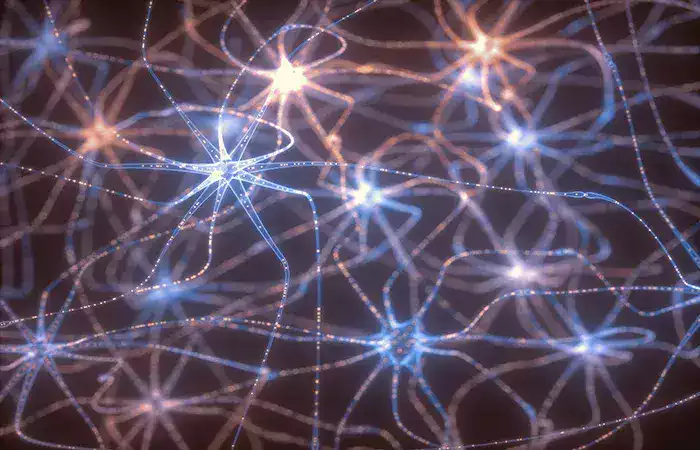
What is a neural network? A neural network is a type of computer model that learns patterns from data. It is one of the main technologies behind modern artificial intelligence, helping computers recognize images, process language, understand speech, and make predictions.
When your phone recognizes a face, a translation app converts a sentence into another language, or an AI assistant generates an answer, neural networks may be working behind the scenes.
The name sounds complicated, and explanations often compare these systems to the human brain. But you do not need to understand neuroscience or advanced mathematics to learn the basic idea.
Imagine a computer system with many adjustable connections. During training, it processes examples, measures how well it performs, and changes those connections to improve future results. That is the foundation of how many neural networks learn.
In this beginner-friendly guide, we will explain artificial neurons, layers, weights, training, deep learning, and real-world applications. We will also examine what neural networks cannot reliably do and why human judgment still matters.
What Is a Neural Network in Simple Terms?
A neural network is a mathematical model made of connected processing units. These units receive numerical information, perform calculations, and pass results to other units.
The connections contain adjustable values called weights. During training, a learning algorithm changes these values so the network can perform a task more effectively.
For example, a network might learn to distinguish pictures of cats from pictures of dogs. Instead of receiving a detailed list of rules describing every possible cat or dog, it learns useful patterns from examples.
Once trained, the model can analyze a new picture and estimate which category fits best.
Why Is It Called a Neural Network?
The name comes from a loose inspiration drawn from biological nervous systems.
Human brains contain neurons that communicate through complex electrical and chemical processes. Artificial neural networks also contain connected units, but those units are mathematical operations performed by computers.
An artificial neuron is not a miniature brain cell. A neural network is not simply a digital copy of the human brain.
The biological analogy helps explain connections and signal processing, but it should not be taken literally.
What Makes Neural Networks Useful?
Traditional computer programs often follow explicitly written rules.
For example, a basic program might calculate a sales tax by multiplying a purchase price by a fixed percentage.
Recognizing a face in a photograph is much harder to describe with a short list of rules. Faces appear at different angles, in different lighting conditions, and with different expressions.
Neural networks are useful because they can learn patterns in complicated data where manually writing every rule would be difficult.
How Is a Neural Network Structured?
Many introductory neural networks are described as groups of artificial neurons arranged in layers.
A simple feedforward network contains an input layer, one or more hidden layers, and an output layer.
1. The Input Layer
The input layer receives information represented as numbers.
For an image, these numbers may describe pixel values. For a financial prediction, they might represent income, expenses, and other numerical characteristics.
For language applications, text must first be converted into numerical representations that the model can process.
Neural networks do not directly understand raw words or photographs in the way humans experience them. The information must be represented in a suitable computational form.
2. The Hidden Layers
Hidden layers perform calculations that transform the input into representations useful for the task.
Each unit combines incoming values with adjustable parameters and applies a mathematical function.
As information moves through the network, different combinations of units can represent increasingly useful patterns.
The exact behavior depends on the network architecture. Not every neural network is organized as a simple sequence of fully connected layers.
3. The Output Layer
The output layer produces the model’s result.
Depending on the task, the result might be:
- A category, such as cat or dog.
- A numerical prediction, such as estimated energy consumption.
- A collection of scores for possible answers.
- A sequence of generated words.
- A representation used by another software component.
Some models transform their output scores into estimated probabilities. However, those values are not necessarily well calibrated, meaning a displayed confidence level should not automatically be treated as a reliable measure of correctness.
Understanding the Three Main Layers
| Layer | Main function | Simple example |
|---|---|---|
| Input | Receives numerical information | Pixel values from a photograph |
| Hidden | Transforms information through learned calculations | Detects useful visual patterns |
| Output | Produces a prediction or representation | Scores for cat and dog categories |
What Does an Artificial Neuron Actually Do?
An artificial neuron performs a relatively simple calculation.
It receives numerical inputs, combines them using weights, usually adds a bias value, and applies an activation function.
Each part contributes to how the network processes information.
Inputs
Inputs are numbers representing information received from the previous processing stage.
For example, imagine a system evaluating whether an image contains a particular shape. Different inputs may represent visual characteristics detected earlier in the network.
Weights
Weights control how strongly individual inputs influence the calculation.
A positive weight can increase the result, while a negative weight can reduce it.
The importance of a weight depends on the mathematical operation and the broader network, so it is not always correct to interpret one weight as a direct measure of a human-understandable feature.
Bias
A bias is another adjustable parameter that helps shift the result of the calculation.
It gives the model additional flexibility when representing patterns.
Activation Function
An activation function transforms the combined input.
Many activation functions introduce nonlinearity, allowing networks to represent relationships that would be difficult or impossible for a purely linear system.
Common examples include ReLU, sigmoid, and tanh, although modern architectures use different functions for different purposes.
A Simple Everyday Analogy
Imagine deciding whether to take an umbrella outside.
You consider the chance of rain, the appearance of the sky, and the weather forecast.
Some factors influence your decision more than others.
An artificial neuron also combines inputs with different weights. The difference is that a neuron performs a mathematical calculation rather than consciously making a decision.
When many such calculations are connected, the network can represent complex patterns.
How Does a Neural Network Learn?
Training is the process of adjusting a neural network’s parameters to improve its performance on a task.
One common approach is supervised learning, where the model receives examples paired with desired answers.
However, neural networks can also be trained through self-supervised learning, reinforcement learning, and other methods.
Step 1: Collect Training Data
Training begins with data appropriate for the task.
For a simple image classifier, the dataset might contain photographs labeled as cats or dogs.
Good training data should be relevant, sufficiently varied, and carefully evaluated for errors and unwanted biases.
A model trained only on a narrow collection of examples may perform poorly in unfamiliar situations.
Step 2: Make an Initial Prediction
At the beginning of training, many network parameters are initialized using mathematical procedures designed to support learning.
The model processes an example and produces an initial output.
That output may be inaccurate because the model has not yet learned the patterns required for the task.
Step 3: Measure the Error
The training system compares the model’s output with the desired result using a loss function.
A loss function assigns a numerical value representing how poorly the model performed under the selected objective.
Different tasks use different loss functions.
Step 4: Calculate How Parameters Should Change
For many neural networks, a method called backpropagation helps calculate how changes to parameters would affect the loss.
Backpropagation works with differentiation and the chain rule from calculus.
You do not need to perform those calculations to understand the purpose: the system estimates how each adjustable parameter contributes to the training error.
Step 5: Update the Parameters
An optimization algorithm, such as a form of gradient descent, adjusts the parameters.
These updates are usually relatively small because changing everything dramatically after each example could make training unstable.
Step 6: Repeat and Evaluate
The process repeats across many examples or batches of examples.
Training performance alone is not enough. Developers also evaluate the model on data that was not used to fit its parameters.
This helps determine whether the network has learned patterns that generalize beyond its training examples.
Neural Network Training at a Glance
| Stage | What happens | Why it matters |
|---|---|---|
| Prepare data | Collect and process examples | Provides information for learning |
| Predict | Run data through the network | Produces an initial result |
| Measure loss | Compare output with the objective | Quantifies training error |
| Backpropagate | Calculate gradients | Shows how parameters affect loss |
| Optimize | Adjust weights and other parameters | Improves the training objective |
| Validate | Test on separate examples | Checks generalization |
A Simple Example: Teaching AI to Recognize Cats
Imagine building a neural network to identify whether a photograph contains a cat.
First, you collect many images showing cats and other subjects.
Next, you prepare the images so the model can process their numerical pixel information.
During training, the model analyzes examples and produces predictions. Its training procedure measures errors and adjusts parameters.
Over time, it may learn visual patterns associated with cats, such as combinations of shapes, textures, and other features.
When presented with a new image, the trained model uses those learned parameters to generate a prediction.
Why Does the Model Sometimes Get It Wrong?
A cat partly hidden behind furniture might be difficult to recognize.
An unusual camera angle or poor lighting may also create problems.
And if the training data contains too few examples of certain situations, the model may not generalize well.
This illustrates an important principle: neural networks learn statistical relationships from data, but their predictions can fail outside the conditions they have learned to handle.
What Is Deep Learning?
Deep learning is a branch of machine learning that uses neural networks with multiple layers of learned representations.
The word “deep” refers to the structure and processing depth of the model, not to human-like depth of understanding.
Deep networks can represent complicated relationships by combining many computational transformations.
Why Do Multiple Layers Help?
In some image-recognition networks, early processing stages respond to relatively simple visual patterns.
Later stages may combine information into more complex representations useful for recognizing objects.
This is a helpful illustration, but not every neural network learns an easily interpretable hierarchy of edges, shapes, and objects.
Language models, for example, use architectures that process relationships between tokens and their context in ways that differ from traditional image classifiers.
Is Deep Learning the Same as Artificial Intelligence?
No. Artificial intelligence is the broader field.
Machine learning is a collection of approaches within AI that use data to develop predictive or decision-making systems.
Deep learning is a family of machine learning approaches based on neural networks.
Not every AI system uses machine learning, and not every machine learning system uses neural networks.
Neural Networks vs. Machine Learning vs. AI
These terms are related, but they are not interchangeable.
| Term | Meaning | Example |
|---|---|---|
| Artificial intelligence | Broad field focused on systems that perform tasks associated with intelligent behavior | Planning, perception, language processing |
| Machine learning | Methods that learn patterns or relationships from data | Fraud prediction model |
| Neural network | Machine learning model built from connected computational units | Image classifier |
| Deep learning | Neural network approaches with multiple learned processing layers | Modern speech recognition system |
| Large language model | Model trained to process or generate language, commonly using a transformer architecture | Text-generation assistant |
For more background, see our beginner’s guide to what machine learning is and why it matters.
What Types of Neural Networks Exist?
Not all neural networks are built the same way. Different architectures are suited to different kinds of information and tasks.
Feedforward Neural Networks
In a basic feedforward network, information moves from input toward output through a sequence of computational layers.
These networks are useful for learning fundamental concepts and can also be applied to practical prediction tasks.
Convolutional Neural Networks
Convolutional neural networks, often called CNNs, use operations that can identify spatial patterns in data.
They have been widely used for image classification, object detection, and other computer vision applications.
Recurrent Neural Networks
Recurrent neural networks, or RNNs, were developed to process sequential information using connections that carry information across processing steps.
They have been used in language, speech, and time-series applications.
Other architectures have replaced them in many modern language-processing systems, but they remain important for understanding the development of neural network technology.
Transformers
Transformers use attention mechanisms to process relationships among elements of a sequence or other structured input.
They are central to many modern large language models.
Attention helps the model combine information from relevant parts of its context, although the details depend on the architecture.
Autoencoders
Autoencoders learn representations by processing input data and attempting to reconstruct information from it.
They can be useful for representation learning, compression-related tasks, and anomaly detection.
Graph Neural Networks
Graph neural networks process information represented as nodes and connections.
They can be applied to relationships in networks, molecules, and other connected structures.
How Do Neural Networks Power ChatGPT and Other AI Tools?
Modern large language models commonly use transformer-based neural networks.
During training, these models learn statistical patterns in language and other available training information.
When a user enters a prompt, the system converts the text into tokens and numerical representations.
The neural network processes the context and produces scores that help determine subsequent tokens.
Repeated generation produces sentences, paragraphs, code, or other structured responses.
Are ChatGPT Responses Stored as Ready-Made Answers?
Not generally. A language model typically generates responses using its learned parameters and the current context rather than retrieving a prewritten answer for every possible question.
Some AI products also include retrieval systems or external tools, but those are additional components rather than the neural network’s basic mechanism.
Why Can a Language Model Make Mistakes?
Training a model to generate plausible language does not guarantee that every statement it produces is accurate.
A model can generate incorrect facts, misinterpret instructions, or produce information that sounds convincing but lacks support.
For a more detailed explanation, read what a large language model is and how it works.
Where Are Neural Networks Used in Everyday Life?
Neural networks support many applications people encounter regularly, although a specific product may use additional methods or may not use neural networks at all.
Smartphones and Photo Applications
Neural networks can support facial recognition, image enhancement, object detection, and automatic photo organization.
Actual features depend on the device and application.
Speech Recognition
Voice assistants and transcription services can use neural networks to convert speech signals into text.
Accuracy may vary with accents, background noise, language, and recording quality.
Language Translation
Neural machine translation systems learn relationships between languages and generate translated text.
They can be useful, but specialized terminology and ambiguous expressions still require careful review.
Medical Imaging
Neural networks may help analyze medical images and identify patterns that warrant professional attention.
Clinical use requires appropriate validation, oversight, and consideration of regulatory requirements. An AI-generated finding should not replace a qualified medical professional’s judgment.
Fraud Detection
Financial institutions may use machine learning systems, including neural networks, to identify unusual transaction patterns.
These systems can help flag suspicious activity, but they may also generate false positives.
Recommendation Systems
Streaming services, online stores, and other platforms may use neural networks to help predict which content or products users might find relevant.
Recommendations are predictions based on available data, not proof of a person’s preferences.
Transportation
Computer vision networks can help certain driver-assistance systems interpret road scenes.
However, the presence of AI does not mean a vehicle is fully autonomous or capable of handling every driving situation.
What Are the Main Limitations of Neural Networks?
Neural networks can be powerful, but they have significant limitations.
They Depend on Training Data
A network learns from the data and objectives used during training.
Incomplete, unrepresentative, or inaccurate data can contribute to poor predictions.
They Can Overfit
Overfitting occurs when a model learns details of its training data that do not generalize well to new examples.
A model may achieve excellent training results while performing poorly in real-world conditions.
They Can Reflect Bias
Training data and design choices may contain historical or sampling biases.
These can lead to uneven performance across different populations or situations.
Responsible development requires appropriate testing, documentation, and ongoing monitoring.
They Can Be Difficult to Explain
Large neural networks may contain millions or billions of parameters.
Understanding exactly why a particular output occurred can be challenging.
Interpretability methods can provide useful insights, but they do not always offer a complete explanation.
They Can Be Expensive to Train
Training large models may require substantial computing resources, electricity, specialized hardware, and engineering effort.
The cost depends on model size, architecture, data, and training method.
They Can Produce Incorrect Outputs
A confident-looking prediction is not necessarily a correct prediction.
Models should be evaluated for the tasks and conditions in which they will be used.
They Do Not Automatically Understand Context Like Humans
Neural networks can display impressive capabilities, but performance on a task does not by itself establish human-like understanding, awareness, or consciousness.
Questions about machine understanding and subjective experience remain subjects of scientific and philosophical debate.
For practical purposes, the safest approach is to judge a model by its tested capabilities, limitations, and reliability rather than assuming it thinks exactly like a person.
Neural Networks: Benefits and Limitations
| Benefit | Why it is useful | Related limitation |
|---|---|---|
| Pattern recognition | Handles complex images, sound, and text | May fail on unfamiliar inputs |
| Learning from data | Reduces the need for manually written rules | Depends on data quality |
| Flexible architectures | Supports many types of tasks | Requires careful model selection |
| Scalability | Can benefit from more data and computation | May require substantial resources |
| Automated predictions | Can support faster analysis | Predictions can be wrong or biased |
| Complex representations | Captures relationships difficult to specify manually | May be difficult to interpret |
How Can Beginners Evaluate a Neural Network’s Results?
You do not need to become a machine learning engineer to ask useful questions about AI predictions.
Ask What the Model Was Designed to Do
A model trained to classify images should not automatically be trusted to provide medical advice or financial recommendations.
Its intended task matters.
Look for Independent Evaluation
Good performance on training data is not enough.
Ask whether the system was tested on representative examples that were not used for training.
Consider the Cost of an Error
A mistaken movie recommendation is inconvenient. An incorrect medical or financial prediction can have much greater consequences.
The level of human oversight should reflect the risks.
Check for Relevant Limitations
Does the system work reliably with different languages, lighting conditions, devices, or populations?
Performance in one environment does not guarantee equal performance elsewhere.
Keep Humans Responsible for Important Decisions
Neural networks can support analysis and decision-making, but important outcomes may require human review, accountability, and appropriate safeguards.
How Do Neural Networks Differ From Traditional Computer Programs?
Traditional programs often rely on explicit instructions written by developers.
Neural networks learn adjustable parameters from data through training.
That distinction does not mean one approach is always better.
For predictable calculations, straightforward rules may be simpler, cheaper, and easier to verify.
For complicated pattern-recognition tasks, neural networks may be more effective.
Many useful software products combine both approaches.
Do You Need to Know Mathematics to Understand Neural Networks?
You can understand the basic concepts without advanced mathematics.
At the beginner level, focus on five ideas:
- Data enters the model as numbers.
- Layers transform that information.
- Weights and other parameters influence the calculations.
- Training adjusts parameters to improve an objective.
- Evaluation checks whether the results are useful and reliable.
If you later want to build neural networks, mathematics becomes more important.
Linear algebra helps describe numerical transformations. Calculus supports gradient-based learning. Probability and statistics help explain uncertainty and evaluation.
Programming skills are also useful, especially for working with data and machine learning frameworks.
Frequently Asked Questions About Neural Networks
Is a Neural Network the Same as Artificial Intelligence?
No. Neural networks are one family of models used within machine learning, which is part of the broader field of artificial intelligence.
Is a Neural Network a Computer Brain?
No. Neural networks are mathematical systems loosely inspired by certain ideas from biological neural systems. They are not literal digital brains.
What Are Weights in a Neural Network?
Weights are adjustable numerical parameters that influence how information is combined and transformed inside the model.
What Is the Difference Between a Neural Network and Deep Learning?
A neural network is a type of computational model. Deep learning generally refers to approaches using neural networks with multiple learned processing layers.
Do Neural Networks Always Need Labeled Data?
No. Supervised learning uses labeled examples, but self-supervised learning and other training approaches can use different kinds of learning signals.
Can Neural Networks Learn From Their Mistakes?
During training, many neural networks improve by using a loss function and an optimization algorithm to adjust their parameters. That does not mean every deployed model automatically learns from every user interaction.
Are All Chatbots Powered by Neural Networks?
No. Some chatbots use predefined rules or other software techniques. Many modern generative AI chatbots use neural network-based language models.
Can Neural Networks Make Decisions Without Humans?
They can generate automated predictions or outputs, and some systems act on those results. Whether that is appropriate depends on the task, the risks, and the safeguards in place.
Are Neural Networks Always Accurate?
No. Accuracy depends on the model, data, evaluation method, and real-world conditions. Errors and unexpected behavior remain possible.
Do Neural Networks Understand What They Are Doing?
They process information and can perform complex tasks. Whether these capabilities amount to particular forms of understanding is debated, and task performance alone does not establish human-like comprehension.
Trusted Sources and Further Reading
For additional technical background, consult these educational resources:
- Google Developers: Neural Networks — introductory explanations of neural network concepts.
- IBM: What Are Neural Networks? — an overview of neural network structure, training, and applications.
- Deep Learning by Ian Goodfellow, Yoshua Bengio, and Aaron Courville — a detailed technical reference available online.
Conclusion
A neural network is a mathematical model that learns useful patterns by adjusting connections and other parameters during training.
Many introductory networks can be understood through three main parts: an input layer that receives numerical information, hidden layers that transform it, and an output layer that produces a result.
Training helps the model improve by measuring errors and updating its parameters. Deep learning extends this idea through architectures with multiple learned processing layers.
Neural networks help power image recognition, speech processing, translation, recommendation systems, and modern language models. They are valuable because they can handle patterns that would be difficult to describe through manually written rules.
However, they are not infallible. Their performance depends on data, architecture, training objectives, and evaluation. They can make mistakes, reflect bias, and behave unpredictably outside familiar conditions.
The most important lesson is simple: neural networks are powerful tools for learning patterns from data, but their results should be interpreted in context.
Understanding these foundations makes it easier to recognize what modern AI can do, what it cannot guarantee, and how to use it responsibly.