Remember the old way? You wake up feeling sick. You call your doctor’s office. The receptionist tells you the next available appointment is in three weeks. You either wait, go to an urgent care center (two-hour wait), or visit the emergency room (four hours and a thousand-dollar bill). You take time off work. You drive across town. You sit in a waiting room full of coughing strangers. You spend fifteen minutes with a doctor. You drive home. The entire process consumes half a day for a problem that might have been solved with a five-minute conversation.
Telemedicine is one pillar of smart health explained in our overview.
That model of healthcare delivery—in-person, appointment-based, clinic-centered—was designed for a different era. It assumed patients could take time off work, had reliable transportation, lived near a clinic, and could afford the lost wages and travel costs. It assumed that every problem required physical examination. It assumed that waiting weeks for non-urgent care was acceptable.
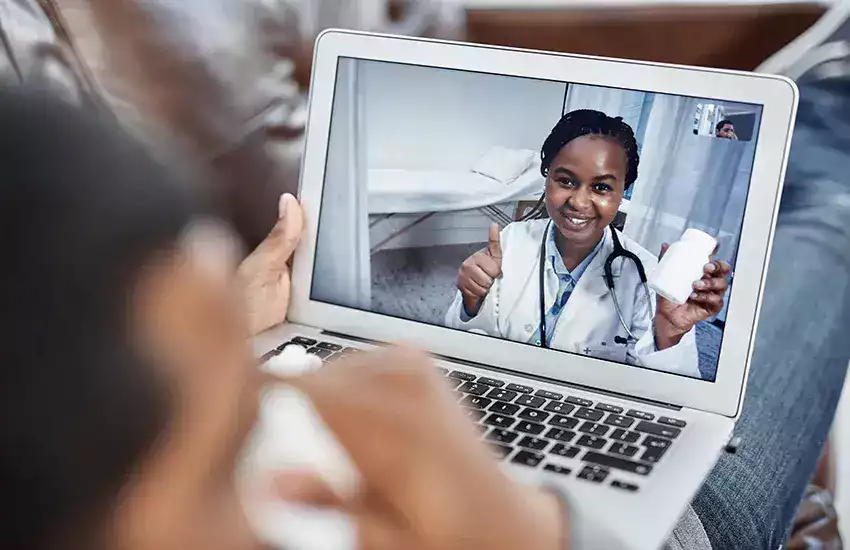
Telemedicine has shattered these assumptions. In 2026, millions of patients have video visits with their doctors from their living rooms, offices, or cars. They message their care teams with questions and receive answers within hours. They share photos of rashes, readings from home blood pressure cuffs, and data from wearable devices. They receive prescriptions electronically, often within minutes of the visit ending.
As an SEO and healthcare technology analyst who has studied telemedicine adoption, implementation, and outcomes, I have seen the transformation firsthand. Telemedicine is not a pandemic-era temporary fix that will fade away. It is a permanent restructuring of how healthcare is delivered, who can access it, and what it costs.
This article will explain how telemedicine is changing access to healthcare. You will learn what works well via video, what still requires in-person care, who benefits most, and what barriers remain.
Part 1: What Telemedicine Actually Is (And Is Not)
Telemedicine is not a single thing. It is a category that includes several distinct types of care delivery.
Real-time video visits are what most people picture when they hear “telemedicine.” You and your provider see and hear each other via a secure, HIPAA-compliant video platform. The visit is scheduled like an in-person appointment but conducted from your home, office, or anywhere with internet access.
Store-and-forward telemedicine involves sending medical information—photos of a rash, X-ray images, wound photos, skin lesion close-ups—to a provider who reviews them and responds asynchronously. You do not need to be online at the same time as the provider. This is particularly useful for dermatology, ophthalmology, and radiology.
Remote patient monitoring (RPM) uses connected devices to collect health data from patients in their homes. Blood pressure cuffs, glucose meters, pulse oximeters, and weight scales send readings automatically to your care team. The provider reviews trends and intervenes when readings fall outside target ranges. RPM is transforming management of chronic conditions like hypertension, diabetes, and heart failure.
Asynchronous messaging is the simplest form: you send a secure message to your provider’s office with a question or concern. A nurse, pharmacist, or physician responds within hours or a day. This replaces phone tag and the “do I really need an appointment for this?” dilemma.
What telemedicine is not is a complete replacement for in-person care. Physical examinations cannot be performed through a screen. Procedures, surgeries, and many diagnostic tests require your physical presence. But for a large and growing percentage of healthcare encounters, in-person care is overkill.
Part 2: The Access Barriers That Telemedicine Breaks
Traditional healthcare access has four major barriers. Telemedicine breaks each one.
Geographic Barrier
If you live in a rural area, your nearest specialist might be 100 miles away. A follow-up visit for a stable chronic condition requires a four-hour round trip, lost wages, and the physical stress of travel. Many rural patients simply skip follow-ups they cannot afford.
Telemedicine eliminates distance. A patient in rural Montana can see a cardiologist in Seattle. A patient in the Navajo Nation can consult with a dermatologist in Phoenix. The visit takes 20 minutes from their living room. The specialist’s expertise becomes available anywhere with an internet connection.
This is not theoretical. Telemedicine has been shown to increase specialist access for rural patients by 300-500% for conditions like stroke, dermatology, and psychiatry. The rural-urban health outcome gap remains significant, but telemedicine is narrowing it.
Transportation Barrier
Not everyone has a car. Not everyone can drive. Elderly patients may no longer drive. Patients with disabilities may face inaccessible public transit. Low-income patients may not be able to afford gas, parking, or bus fare. In many cities, a clinic visit that takes 20 minutes of doctor time requires 2-3 hours of travel and waiting on public transportation.
Telemedicine removes transportation entirely. The patient logs in from wherever they are. No bus. No parking garage. No waiting room chairs that are uncomfortable for someone with back pain. For patients with mobility limitations, the reduction in physical stress is substantial.
Time Barrier
The traditional 9-to-5 clinic schedule assumes patients can take time off work. Many cannot. Hourly workers lose wages. Gig workers have no paid sick leave. Single parents cannot easily find childcare for an afternoon appointment.
Telemedicine expands access outside traditional hours. Evening and weekend video visits are increasingly common. Asynchronous messaging works around the clock. A working parent can send a message about their child’s ear infection at 9 PM and have a prescription sent to the pharmacy by morning.
Cost Barrier
In-person visits have high overhead: clinic space, medical assistants, receptionists, billing staff, cleaning services, utilities. Telemedicine visits have lower overhead. Fewer staff, less space, lower facility costs. These savings can be passed to patients.
For patients, telemedicine eliminates transportation costs (gas, parking, bus fare, rideshare), lost wages (shorter time away from work), and childcare costs. Even when the visit fee is identical to in-person care, the total cost to the patient is substantially lower.
Part 3: What Telemedicine Does Well (And What It Does Not)
Telemedicine is not appropriate for every medical problem. Knowing the difference prevents frustration and ensures safety.
Excellent for Telemedicine
Follow-up visits for stable chronic conditions: Diabetes, hypertension, asthma, thyroid disorders, depression, anxiety. The patient is stable. The medication regimen is established. The visit is about reviewing trends, adjusting doses, and answering questions. Physical exam is not required.
Medication management: Psychiatric medications often require monitoring for side effects and effectiveness. Physical exam is not needed. A video visit or even a secure message exchange suffices.
Minor acute problems: Pink eye, sinus infection, urinary tract infection, sore throat (without severe symptoms), rash (with good quality photos), minor cuts (with photo). These conditions can be diagnosed visually or symptomatically without physical exam.
Mental health: Therapy and medication management for depression, anxiety, and many other conditions work effectively via video. Many patients actually prefer mental health telemedicine because they are in their own comfortable environment.
Preventive counseling: Nutrition counseling, smoking cessation, weight management, exercise guidance. These are conversations, not procedures.
Poor for Telemedicine
New, undiagnosed chest pain: This requires in-person evaluation, likely including an ECG, blood work, and possibly imaging. Telemedicine is not safe for undiagnosed cardiac symptoms.
Shortness of breath with concerning features: If you cannot speak full sentences, have blue lips or fingernails, or are using accessory breathing muscles, go to the emergency room. Telemedicine cannot assess your respiratory status adequately.
Severe abdominal pain: The differential diagnosis is broad (appendicitis, gallbladder, kidney stone, obstruction, etc.). Physical exam (palpation, percussion, auscultation) is essential. Telemedicine cannot perform these maneuvers.
Headache with neurological symptoms: New severe headache with vision changes, weakness, speech difficulty, or confusion requires in-person evaluation to rule out stroke or other serious pathology.
Any condition requiring a procedure: Laceration repair, joint injection, skin biopsy, Pap smear, ear wax removal. The doctor needs to touch you.
The “I need a physical exam” gray zone: Some conditions fall into a gray area where telemedicine might work for some patients but not others. A sore throat with fever might be strep (testable with a rapid strep kit, which requires an in-person swab) or viral (no treatment needed). Telemedicine can screen but may still send you for in-person testing.
The key question: Would this visit change if I had a physical exam? If the answer is “yes, significantly,” then telemedicine is likely not appropriate.
Part 4: Who Benefits Most from Telemedicine
Telemedicine is not a one-size-fits-all solution. Some populations benefit disproportionately.
Rural and frontier residents: As discussed, distance is eliminated. The specialist you need might be hundreds of miles away physically but one click away digitally.
Patients with mobility limitations: Getting into a car, traveling, navigating a clinic, and sitting in waiting room chairs can be exhausting or impossible for someone with severe arthritis, multiple sclerosis, or advanced age. Telemedicine brings care to them.
Working parents: The logistics of taking a sick child to the doctor—time off work, loading the child into the car, waiting, driving back—are immense. Telemedicine reduces this to a 15-20 minute video visit from home.
Patients with mental health conditions: The stigma of visiting a psychiatrist’s office can be a barrier. The effort of leaving the house when depressed can be insurmountable. Telemedicine reduces friction. Many patients open up more easily from their own space.
Caregivers: Family members caring for elderly or disabled relatives often cannot leave the home for their own appointments. Telemedicine allows them to attend visits while staying with their loved one.
Part 5: The Evidence — Does Telemedicine Actually Work?
Skeptics worry that telemedicine is a lower-quality substitute for real care. The evidence says otherwise for appropriate use cases.
Diabetes management: Multiple randomized controlled trials show that telemedicine-supported care (remote monitoring + video visits) improves blood sugar control (HbA1c) as effectively as in-person care, with some studies showing superior results due to more frequent touchpoints.
Hypertension: Home blood pressure monitoring transmitted to providers via telemedicine leads to better blood pressure control than usual care. Patients measure more consistently, and providers adjust medications more promptly.
Mental health: Cognitive behavioral therapy delivered via video is non-inferior to in-person therapy for depression and anxiety disorders. Patient satisfaction is equal or higher for video visits.
Follow-up visits: For stable chronic conditions, video follow-ups produce equivalent outcomes to in-person visits while reducing no-show rates (patients are more likely to attend a video visit than to drive to the clinic).
Dermatology: Store-and-forward telemedicine (sending photos to a dermatologist) has high diagnostic accuracy for common skin conditions like acne, eczema, and suspicious moles requiring triage.
The evidence is clear: for selected conditions, telemedicine is not worse than in-person care. In some dimensions (access, convenience, patient satisfaction, follow-up adherence), it is better.
Part 6: Barriers and Limitations That Remain
Telemedicine has made enormous progress, but barriers persist.
The digital divide: Telemedicine requires broadband internet and a device with a camera. Millions of low-income, rural, and elderly Americans lack one or both. Expanding broadband access is a prerequisite for equitable telemedicine.
Licensing and reimbursement: If you live in Ohio and your specialist is in Michigan, can you have a telemedicine visit? The answer varies by state, by insurance, and by the specific provider’s licensing. Interstate licensing compacts are expanding but remain incomplete. Reimbursement for telemedicine is more generous than before the pandemic but still inconsistent across payers.
The physical exam gap: Some conditions truly require a physical exam. No technology solves this yet. Remote exam tools (digital stethoscopes, otoscopes that attach to smartphones) exist but are not widely deployed in home settings.
Privacy concerns: Not everyone has a private space for a video visit. A patient living in a crowded home or shelter may not be able to discuss sensitive health issues without others overhearing. Audio-only telephone visits (which require less privacy and no video) can help but are not equivalent.
Technology fatigue: Patients and providers alike can burn out on yet another video visit. Some interactions are better in person. The goal is not 100% telemedicine. The goal is the right modality for each visit.
Conclusion
Telemedicine has fundamentally changed access to healthcare. The traditional model—in-person, appointment-based, clinic-centered—assumed patients could travel, could wait, could take time off work, and could afford the associated costs. For many patients, those assumptions were false.
Telemedicine breaks the geographic barrier. A patient in rural Montana can see a cardiologist in Seattle. Telemedicine breaks the transportation barrier. An elderly patient who no longer drives can have a video visit from their living room. Telemedicine breaks the time barrier. A working parent can send a message about a sick child at 9 PM and have a prescription waiting at the pharmacy by morning. Telemedicine breaks the cost barrier. No gas, no parking, no lost wages for a half-day clinic visit.
Combined with AI for early risk detection, a virtual visit can catch problems sooner.
The evidence is clear. For stable chronic conditions (diabetes, hypertension, mental health, thyroid disorders), telemedicine produces outcomes equivalent to in-person care with higher patient satisfaction and lower no-show rates. For follow-up visits, medication management, and minor acute problems (pink eye, sinus infection, rash, urinary tract infection), telemedicine is often superior because it removes barriers that kept patients from seeking timely care.
Telemedicine is not a complete replacement. New chest pain, severe abdominal pain, neurological symptoms, and conditions requiring procedures or physical examination still need in-person care. But those conditions represent a minority of healthcare encounters. The majority—follow-ups, medication checks, and chronic disease management—are well suited to virtual visits, especially when paired with health tracking apps.
The remaining barriers are real. The digital divide excludes low-income, rural, and elderly patients who lack broadband or devices. Interstate licensing restricts access to specialists across state lines. The physical exam gap means some conditions will always need in-person evaluation. Privacy concerns make video visits difficult for patients without private spaces.
But the trajectory is clear. Telemedicine is not a pandemic-era temporary fix that will fade. It is a permanent restructuring of healthcare delivery that is expanding access, reducing costs, and improving patient experience. The technology will improve. Broadband will expand. Licensing compacts will grow. Remote exam tools will become more capable. The digital divide will narrow, though it will not disappear.
Healthcare has always been unequal. Where you live, how much money you have, whether you have reliable transportation, whether you can take time off work—these factors have dictated your access to care more than your actual medical needs. Telemedicine cannot eliminate these inequalities entirely. But it can dramatically reduce them. A video visit does not care if you live in a city or a farm. It does not care if you drive a luxury car or take the bus. It does not care if you have paid sick leave or hourly wages.
Telemedicine democratizes access. Not perfectly. Not completely. But meaningfully. For millions of patients who previously struggled to access care, the doctor is no longer across town. The doctor is in their pocket. And that changes everything.