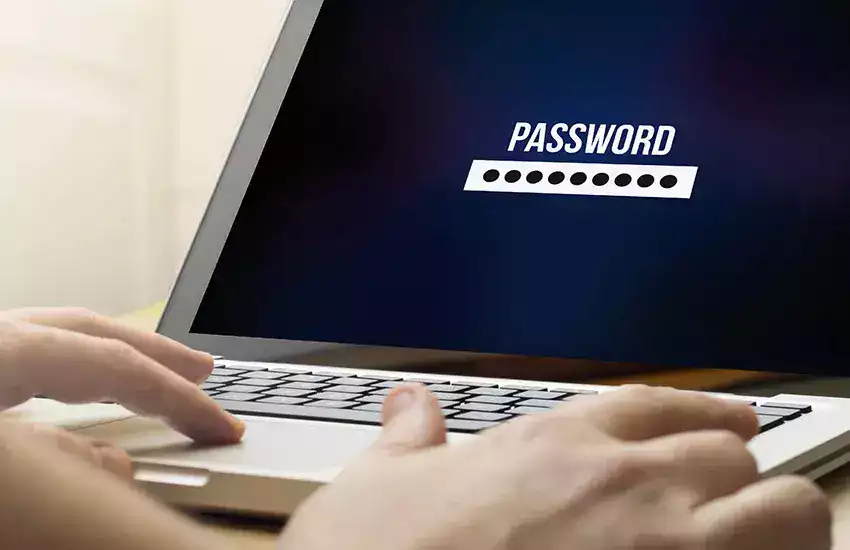
Passwords are the keys to your digital life. Your email. Your bank account. Your social media. Your work systems. Your medical records. Everything you care about online is protected by a string of characters that you type dozens of times per day without thinking.
Yet most people are terrible at passwords. They reuse the same password across dozens of sites. They choose “password123” or their pet’s name or their birthday. They write passwords on sticky notes attached to their monitor. They store passwords in plain text files on their desktop. They share passwords via email or text message. They ignore security warnings because “it’s too hard to remember all those different passwords.”
The statistics are alarming. The average person has over 100 online accounts but uses only a handful of unique passwords. More than 80% of confirmed data breaches involve stolen or weak passwords. Credential stuffing attacks—where attackers take a password leaked from one site and try it on hundreds of others—work because people reuse passwords. One breach becomes a dozen breaches.
As an SEO and digital security consultant who has responded to countless account takeovers, I have seen the aftermath of poor password hygiene. I have watched business owners lose access to their entire online presence because their email password was the same as their LinkedIn password that was leaked in a breach. I have helped freelancers recover accounts after attackers locked them out and demanded ransom. I have seen the panic, the shame, and the hours of cleanup.
The good news is that password security is solvable. It is not even difficult. The solutions exist. They are free or very cheap. They take an hour to set up and minutes per week to maintain. The only barrier is knowledge and willingness.
This guide will teach you exactly how to create strong passwords and manage them safely. No technical background required. No expensive software. Just practical, actionable steps that work in 2026.
Part 1: Why Your Current Password Habits Are Failing You
Before we fix the problem, understand why the old way does not work.
Human memory is the enemy of password strength.
You can remember maybe half a dozen unique, moderately complex passwords reliably. You have over 100 accounts. The math does not work. So you compensate by reusing passwords, making them simple, or writing them down insecurely. This is not laziness. It is a predictable failure of human cognition. Systems that rely on human memory for security are doomed to fail.
Attackers are not guessing one password at a time.
The image of a hacker sitting at a keyboard typing “letmein… letmein… letmein” is fiction. Modern attacks use automation. A credential stuffing tool can try millions of password combinations per second. It has your password from the 2012 Adobe breach, the 2017 Equifax breach, the 2024 Ticketmaster breach, and dozens more. It tries every password you have ever used across every service you have ever joined.
Password complexity rules made things worse.
“Must include uppercase, lowercase, number, and symbol. Change every 90 days.” These rules, now known to be counterproductive, led to predictable patterns: “Spring2025!” becomes “Summer2025!” becomes “Fall2025!” Attackers know these patterns. The rules also made passwords harder to remember, driving people to write them down.
The industry has moved away from complexity and expiration. The new guidelines from NIST (National Institute of Standards and Technology) emphasize length over complexity and no mandatory expiration unless there is evidence of compromise.
Part 2: What Actually Makes a Password Strong
A strong password has exactly three properties:
1. Length (the most important factor)
Every additional character exponentially increases the number of guesses required to crack a password. A password with 8 characters (lowercase only) has 208 billion possibilities. A password with 12 characters has 95 trillion possibilities. A password with 16 characters has 43 quintillion possibilities.
Length matters more than complexity. “correct horse battery staple” (25 characters, all lowercase, common words) is far stronger than “P@ssw0rd!” (8 characters, mixed case, numbers, symbols). The long phrase takes centuries to crack. The short complex password takes hours.
Aim for at least 12 characters. Prefer 16 or more.
2. Uniqueness
Your password for your bank must be different from your password for your email must be different from your password for Netflix. A breach of one service should not put others at risk. This is non-negotiable.
3. Randomness (or effective pseudo-randomness)
Predictable patterns fail. “Qwerty123” fails. “Password2025” fails. “May2026!” fails. The best passwords are random strings of characters. The next best are long, unrelated phrases that are easy to remember but hard to guess.
What fails miserably:
-
Your name, your spouse’s name, your pet’s name, your child’s name
-
Your birthday, anniversary, graduation year
-
Keyboard patterns (qwerty, asdfgh, 1qaz2wsx)
-
Common words with substitutions (p@ssw0rd, adm!n, s3cr3t)
-
Any password shorter than 12 characters
Part 3: The Only Practical Solution — A Password Manager
Given that you cannot remember 100 unique, random, 16-character passwords, and you should not write them in a notebook, what is the solution?
A password manager.
A password manager is an encrypted vault that stores all your passwords — our guide on how password managers work explains the details. You remember one single, very strong master password. The password manager remembers everything else. It generates random, unique, maximum-length passwords for every site. It autofills them when you return. It syncs across your devices.
How a password manager changes your life:
-
You never need to invent another password. The manager invents them for you.
-
You never need to remember another password (except the master password and a few critical ones for devices that cannot run the manager).
-
You never reuse a password because every password is unique and random.
-
You never worry about forgetting a password because the manager remembers.
-
You can easily audit your passwords to find weak, reused, or old ones.
Recommended password managers (all excellent):
-
Bitwarden: Free, open-source, audited, highly secure. The best choice for most individuals. Free tier includes unlimited passwords and sync across all devices.
-
1Password: Paid ($36/year), polished, excellent family sharing features. Best for families and teams.
-
Apple Passwords: Free, built into iOS, iPadOS, and macOS. Works well if you are entirely in the Apple ecosystem. Limited on Windows and Android.
-
Proton Pass: Free tier available, from the makers of Proton Mail. Strong privacy focus.
-
KeePassXC: Free, open-source, local-only (no cloud sync). Most secure because your vault never touches the internet, but requires manual syncing across devices.
Avoid: Built-in browser password managers (Chrome, Edge, Safari) are convenient but lack advanced features and are often less secure. Also avoid LastPass, which has suffered multiple major breaches.
Part 4: Setting Up Your Password Manager Correctly
Buying a safe does not help if you leave the key in the lock. Setting up a password manager correctly is essential.
Step 1: Create Your Master Password
Your master password is the one password you will remember. It protects every other password. It must be exceptional.
Create a master password that is:
-
Long: At least 16 characters. 20 is better.
-
Unique: Used nowhere else. Never. Not your email password, not your bank PIN, not anything.
-
Memorable but unpredictable: Use a passphrase. Four to six random words strung together. “correct horse battery staple” style, but with your own words.
Example passphrase: “VividPorchConsultShovelNine” (24 characters). Easy to remember because you can picture a vivid porch consulting a shovel with the number nine. Impossible to guess.
Do not use song lyrics, quotes from literature, or common phrases. Attackers have dictionaries of these.
Write your master password down once. On paper. Store that paper in a secure location (a locked drawer, a safe, a safety deposit box). Do not store it digitally. Do not take a photo. Do not email it to yourself.
Step 2: Import or Add Passwords
If you have existing passwords saved in your browser, most password managers can import them. Do this, but understand: imported passwords are likely weak or reused. The import is a starting point, not the finish line.
Then, for every site you visit, do one of three things:
-
When you log in, the password manager offers to save the password. Accept.
-
When you create a new account, use the manager’s password generator to create a random password. Save it immediately.
-
For existing accounts, use the manager’s “change password” feature to replace weak passwords with generated ones.
Step 3: Enable Two-Factor Authentication for the Manager Itself
Your password manager is the most sensitive application you use. Protect it with two-factor authentication (2FA). Use an authenticator app (Google Authenticator, Authy, 2FAS) or a hardware key (YubiKey). Do not use SMS.
Two-factor authentication adds an additional security layer because knowing your master password alone is no longer enough to access the vault. A second verification method helps protect your stored credentials even if the password itself is compromised. Our guide to what two-factor authentication is and why you need it explains how 2FA works, the different verification methods available, and why some methods provide stronger protection than others.
Step 4: Install on All Devices
Install your password manager on every device you use: phone, laptop, desktop, tablet. Sync across devices using the manager’s encrypted cloud sync (for Bitwarden, 1Password, Proton Pass) or manual sync (for KeePassXC).
On mobile devices, enable biometric unlock (Face ID, fingerprint). This allows convenient access while keeping the vault secure.
Part 5: Beyond Passwords — Modern Authentication Methods
Passwords are dying. Slowly, but surely. Modern authentication methods are more secure and more convenient.
Passkeys are the future.
A passkey is a cryptographic key pair stored on your device. You unlock it with your fingerprint, face, or device PIN. There is no password to steal, no password to guess, no password to phish. When you log into a site, your device and the site perform a cryptographic handshake.
Passkeys are supported by Google, Apple, Microsoft, PayPal, Amazon, eBay, and thousands of other sites. In 2026, most major platforms support them.
How to use passkeys with a password manager:
Modern password managers (Bitwarden, 1Password, Apple Passwords, Proton Pass) can store and sync passkeys. When a site offers passkey creation, your password manager saves the passkey. When you return to the site, your password manager presents the passkey. Unlock with biometrics. You never type anything.
Adopt passkeys wherever offered. They are more secure than even the strongest password because they are immune to phishing and cannot be stolen in a data breach.
Part 6: Safe Password Habits for Daily Life
Even with a password manager, certain situations require attention.
What About Passwords You Must Type?
Some devices or systems do not work with password managers: your work computer’s login password, your router’s admin password, your encrypted hard drive’s password, your phone’s PIN.
For these, use a strong passphrase. Eight random words is overkill; four to six is sufficient. Write it down physically and store it securely if needed.
How to Handle Emergency Access
If you are incapacitated or die, someone may need access to your accounts. Password managers offer emergency access features:
-
Bitwarden: Emergency Access feature. You designate a trusted contact. If you do not respond to a request within a specified waiting period (e.g., 7 days), they gain access.
-
1Password: Emergency Kit. A PDF with your account details. Print it and store in a safe. Give a sealed envelope to a trusted person with instructions.
Do not share your master password directly. Use these formal emergency mechanisms.
How Often Should You Change Passwords?
Rarely. NIST guidance says: Do not force password changes without evidence of compromise. If there is no breach, a strong, unique password does not weaken over time.
Change your password only when:
-
You have evidence the password was compromised (the service notifies you of a breach)
-
You suspect someone else knows it (shared it inadvertently, used it on a compromised device)
-
The service forces a change (some still do, despite guidance)
Part 7: Recognizing and Avoiding Password Theft
Strong passwords do not help if you give them away. Phishing remains the most common attack vector.
How Phishing Works
You receive an email that looks like it is from your bank, PayPal, or Google. It says there is a problem with your account. Click this link to verify your identity. The link goes to a fake website that looks identical to the real one. You type your username and password. The attackers capture them — our guide on staying safe online covers how to spot these traps.
How to Defeat Phishing
Never click links in emails that ask for your login. Navigate to the site directly by typing the address or using a bookmark.
Use your password manager’s autofill. Password managers check the website’s URL before filling. If you are on a fake site (paypa1.com instead of paypal.com), your password manager will not autofill. This is one of the most effective anti-phishing protections.
Check the URL yourself. Before entering a password, look at the address bar. Is it exactly the correct domain? Not “accounts-google.com“ but “accounts.google.com“? Not “amazon-security.com“ but “amazon.com“? Attackers register domains that look similar.
Enable passkeys where available. Passkeys cannot be phished. The cryptographic handshake includes the site’s verified identity.
Phishing attacks are particularly effective because they target people rather than trying to break password encryption directly. Fake emails, login pages, urgent requests, and deceptive links are designed to make you reveal credentials voluntarily. Our guide to what phishing is and how to recognize a phishing attack explains the most common warning signs, how these scams work, and the practical steps you can take to avoid being tricked.
Credential Stuffing: The Reuse Risk
Even if you are careful, if you reuse passwords across sites, you are vulnerable to credential stuffing. A breach of a low-security forum where you used the same password as your email account gives attackers your email password.
The only defense is unique passwords per site. A password manager makes this effortless.
Stolen passwords are only one of several ways attackers can obtain personal information. Phishing, malware, compromised websites, intercepted connections, and leaked credentials can all expose data that attackers later use against other accounts. Our guide to how hackers steal information and how to protect yourself explains the most common attack methods and the practical security measures you can use to reduce your exposure.
Part 8: What About Two-Factor Authentication Backup Codes
When you enable 2FA on important accounts (email, password manager, banking), you receive backup codes—typically 10 single-use codes that bypass 2FA if you lose your phone.
Store these codes securely. Print them. Put the printout with your master password paper. Do not store them digitally on your phone or computer. If you store them in your password manager, you create a circular dependency (you need the 2FA to get into the password manager, but the backup codes are inside…).
Some people store backup codes in a separate, offline password manager vault or a simple encrypted file. Others rely on physical printouts. Choose what works for your risk profile.
Conclusion
Passwords are not going away entirely, but how you use them must change. The old model—memorizing slightly different variations of the same password, changing them every 90 days, writing them on sticky notes—never worked. It created security theater, not security.
The modern, effective approach is simple:
Get a password manager. Bitwarden is free, excellent, and works everywhere. Set it up today. Create a strong, memorable master password (16+ characters, unique, never used elsewhere). Write it down once on paper and store that paper somewhere safe. Turn on 2FA for the password manager using an authenticator app, not SMS.
Then, start using the password manager for everything. Let it generate random, long, unique passwords for every site you use. Let it autofill so you never type passwords again. Audit your existing passwords and replace weak or reused ones. Enable passkeys wherever they are offered.
The time investment is one hour for initial setup, then minutes per week for ongoing maintenance. The return is immeasurable: protection against credential stuffing, account takeover, data breach fallout, and the nightmare of waking up locked out of your own digital life.
The alternative is not acceptable. Eighty percent of data breaches involve weak or stolen passwords. You are not the exception. The attacker is not coming for you specifically—they are casting a wide net, and the only thing that determines whether you are caught is whether you have a unique password on the site that gets breached.
Stop reusing passwords. Stop trying to remember them all. Stop ignoring the problem. Get a password manager today. It is the single highest-return security investment you can make — and a cornerstone of cybersecurity basics. Your future self, the one who does not spend a weekend resetting every account because one forum got hacked, will thank you.